Which OTC Nausea Medicine Actually Works for Your Symptoms?
The nausea aisle at any pharmacy looks simple. A dozen boxes, a few familiar names, labels that say "nausea relief" or "upset stomach." What those labels don't tell you is that the products work through entirely different biological mechanisms, and choosing the wrong one for your specific cause is like taking a decongestant for a sprained ankle. You'll feel nothing, or worse, you'll experience side effects with no benefit.
The single most useful decision you can make before buying an OTC nausea medicine is not which brand to choose. It's which active ingredient class matches the cause of your nausea.
That's what this guide is built around. It covers the four major OTC antiemetic ingredient classes, explains the mechanism behind each, maps them to the causes they actually treat, and walks through the drowsiness and safety tradeoffs that change the math for specific groups including pregnant women, older adults, and children.
The 4 OTC Antiemetic Ingredient Classes, Explained by Mechanism
Nausea is not a single event. It is a signal that can originate from the inner ear, the gut lining, the brainstem, or hormonal shifts during pregnancy. Each origin point involves different receptors and neurotransmitters, which is why no single OTC ingredient works across every cause. The four classes below each target a distinct part of that system.
Class 1: Antihistamines (Dimenhydrinate and Meclizine)
Mechanism: Antihistamines block H1 histamine receptors in the vestibular system, the network of structures in the inner ear that detect motion and balance. When the vestibular system sends conflicting signals to the brainstem, such as when your eyes and inner ear disagree about movement, the result is motion sickness. By suppressing those signals before they reach the brainstem's vomiting center, antihistamines interrupt the nausea reflex at its source.
The two most common antihistamine antiemetics are dimenhydrinate (Dramamine Original) and meclizine (Dramamine Less Drowsy, Bonine). They work through the same basic mechanism but differ meaningfully in duration and sedation level:
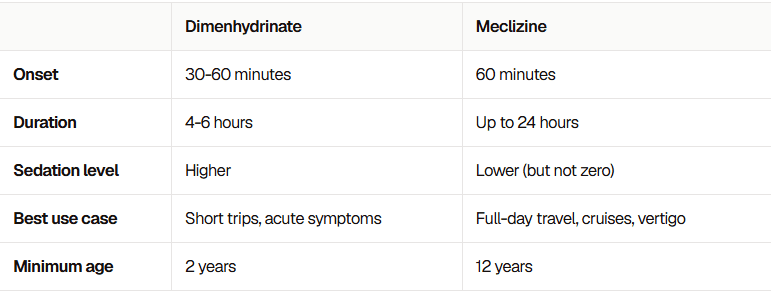
What antihistamines treat well: Motion sickness (car, plane, boat, amusement rides), vertigo-related nausea.
What they do not treat: Nausea originating in the gastrointestinal tract. Antihistamines have no mechanism of action against stomach flu, food poisoning, or pregnancy nausea. Taking Dramamine for a stomach bug will not help and may add unnecessary drowsiness on top of existing misery.
Important note on "non-drowsy" labeling: Meclizine products marketed as "less drowsy" are less sedating than dimenhydrinate, not sedation-free. Clinical data shows meclizine still causes measurable drowsiness in a meaningful share of users. If any sedation is unacceptable for your situation, meclizine is not a safe choice.
Class 2: Bismuth Subsalicylate
Mechanism: Bismuth subsalicylate (the active ingredient in Pepto-Bismol and Kaopectate) works directly inside the gastrointestinal tract through three simultaneous actions. First, it has mild antimicrobial properties that reduce bacterial load from food poisoning. Second, it exerts anti-inflammatory effects on the gut lining, reducing the irritation that drives nausea signals upward. Third, it slows intestinal motility, which reduces the cramping and urgency that accompany GI illness. The FDA's DailyMed database contains the full approved labeling for bismuth subsalicylate products, including dosing instructions and contraindications.
Critically, bismuth subsalicylate does not cross the blood-brain barrier. It has no effect on the vestibular system, which means it does nothing for motion sickness or vertigo.
What bismuth subsalicylate treats well:
- Food poisoning (bacterial gastroenteritis)
- Stomach flu (viral gastroenteritis)
- Traveler's diarrhea with associated nausea
- Indigestion and heartburn-related nausea
What it does not treat: Motion sickness, vertigo, or any nausea that originates outside the GI tract.
Key safety flag: Bismuth subsalicylate contains salicylate, a compound chemically related to aspirin. This creates real restrictions for certain groups. Full details are in the safety section below, but the two most critical: do not give it to children or teenagers with flu or chickenpox symptoms (Reye's syndrome risk, per FDA labeling guidance), and avoid it during pregnancy, particularly the second and third trimesters.
Class 3: Phosphorated Carbohydrate Solution
Mechanism: Phosphorated carbohydrate solution (the active ingredient in Emetrol) works through a different pathway entirely. The concentrated carbohydrate solution is thought to reduce smooth muscle contractions in the stomach wall, which decreases the hypermotility that contributes to nausea and the urge to vomit. It acts locally in the stomach rather than systemically, which is why it produces no drowsiness and has very few drug interactions.
The tradeoff is a narrower evidence base compared to the other classes. It is best suited for mild, non-specific stomach upset rather than nausea with a clear pathological cause.
What phosphorated carbohydrate solution treats well:
- General stomach upset or queasiness without a specific cause
- Nausea from overeating or mild indigestion
- Mild nausea in children age 2 and up (per product labeling)
- Situations where drowsiness is not acceptable
What it is not appropriate for: People with diabetes (high sugar content), hereditary fructose intolerance, or nausea severe enough to require repeated dosing beyond the labeled limit of five doses per hour.
Class 4: Ginger (Zingiber officinale)
Mechanism: Ginger's antiemetic mechanism is not fully characterized, but research points to two primary pathways. Gingerols and shogaols, the active compounds in ginger root, appear to antagonize 5-HT3 serotonin receptors in the gut, which is the same receptor type targeted by prescription antiemetics like ondansetron. They also have mild prokinetic effects, meaning they help move stomach contents forward rather than allowing them to stagnate. The NIH National Center for Complementary and Integrative Health notes that ginger has a long history of use for nausea and that some evidence supports its effectiveness, particularly for pregnancy-related nausea.
A 2014 systematic review published in the British Journal of Anesthesia found ginger effective for postoperative nausea and pregnancy-related nausea, with a favorable safety profile. ACOG lists ginger as a recommended non-pharmacological option for nausea and vomiting of pregnancy.
What ginger treats well:
- Pregnancy nausea, first trimester, mild to moderate severity
- Postoperative nausea (mild cases)
- General queasiness where a non-drug option is preferred
Effective dose: 1,000 to 1,500 mg of standardized ginger extract daily, taken in divided doses. Doses above 2,000 mg per day may cause GI discomfort in some people. Ginger supplements, ginger chews, and ginger tea can all deliver a therapeutic dose, but standardized extract capsules provide the most consistent potency.
What ginger does not reliably treat: Motion sickness (insufficient vestibular evidence), severe nausea from chemotherapy, or nausea requiring rapid onset of relief.
Which OTC Nausea Medicine Should You Take? A Cause-by-Cause Guide
The table below is the core of this guide. Match your cause to the recommended ingredient class, then check the safety section for any restrictions that apply to you before buying.
| Cause of Nausea | First-Line Ingredient Class | Why It Matches | What to Avoid |
|---|---|---|---|
| Motion sickness (car, plane, boat) | Antihistamine (meclizine or dimenhydrinate) | Blocks vestibular signals before they reach the vomiting center | Bismuth, ginger (no vestibular mechanism) |
| Stomach flu (viral gastroenteritis) | Bismuth subsalicylate | Reduces GI inflammation and slows motility | Antihistamines (wrong mechanism entirely) |
| Food poisoning (bacterial) | Bismuth subsalicylate | Antimicrobial + anti-inflammatory at the gut lining | Antihistamines |
| Pregnancy nausea, mild to moderate | Ginger; vitamin B6 (pyridoxine) | 5-HT3 antagonism in gut; B6 reduces nausea through CNS pathways | Bismuth subsalicylate (salicylate risk in pregnancy) |
| General stomach upset, no clear cause | Phosphorated carbohydrate solution | Reduces stomach wall contractions locally; no systemic effects | N/A for mild use |
| Vertigo-related nausea | Meclizine (antihistamine) | Longer duration suppresses sustained vestibular dysfunction | Short-acting dimenhydrinate for chronic use |
| Indigestion or heartburn nausea | Bismuth subsalicylate | Coats stomach lining; reduces acid irritation | Antihistamines (no GI mechanism) |
| Traveler's diarrhea with nausea | Bismuth subsalicylate | Antimicrobial, antidiarrheal, and antiemetic in one | N/A |
← Swipe to see more →
Motion Sickness: Take It Before You Board, Not After
For motion sickness, when you take the antihistamine matters almost as much as which one you choose. Both meclizine and dimenhydrinate work best when taken before exposure to motion, not after nausea has already started. The American Academy of Family Physicians recommends taking antihistamines 30 to 60 minutes before travel begins. Once active vomiting has started, oral medications are less reliable because gastric absorption slows significantly during nausea.
For a full day of travel, meclizine's 24-hour duration is a better fit than dimenhydrinate's 4 to 6 hours. For a short car ride or a single flight, dimenhydrinate works fine and has a faster onset.
Stomach Flu vs. Food Poisoning: Same Ingredient, Different Reasons
Both stomach flu and food poisoning respond to bismuth subsalicylate, but through slightly different mechanisms. Stomach flu (viral gastroenteritis) benefits primarily from bismuth's anti-inflammatory and motility-reducing effects. Food poisoning (bacterial gastroenteritis) additionally benefits from bismuth's antimicrobial properties, which can reduce the bacterial load contributing to symptoms.
In both cases, hydration is more important than medication. Bismuth addresses comfort, not cure. If you cannot keep fluids down for more than 24 hours, that is a reason to seek care, not to increase the dose.
Pregnancy Nausea: A Higher Safety Standard Applies
The safety bar for anything taken during pregnancy is higher than for any other population. Ginger at 1,000 mg per day has the strongest combined safety and efficacy evidence for mild to moderate nausea in the first trimester. Vitamin B6 (pyridoxine) at 10 to 25 mg three times daily is the first pharmacological option recommended by ACOG's clinical practice guidelines for nausea and vomiting of pregnancy.
If OTC options are not providing enough relief, that is a conversation for a healthcare provider, not a reason to escalate to other OTC classes without guidance. Bismuth subsalicylate in particular should be avoided throughout pregnancy due to its salicylate content.
The Drowsiness Tradeoff: What to Expect From Each Ingredient Class
Drowsiness is the most common complaint about OTC nausea medicines, and it is also one of the most misunderstood. The sedation associated with antihistamines is not a side effect in the conventional sense. It is a direct consequence of how these drugs work: H1 receptor blockade in the brain affects both the vestibular system and the arousal centers that keep you alert. You cannot fully separate the antiemetic effect from the sedative one.
Sedation Level by Ingredient Class
| Ingredient Class | Sedation Risk | Reason |
|---|---|---|
| Dimenhydrinate | High | CNS H1 blockade plus anticholinergic effects |
| Meclizine | Moderate | CNS H1 blockade; less anticholinergic than dimenhydrinate |
| Bismuth subsalicylate | None | Acts only in the GI tract; does not cross the blood-brain barrier |
| Phosphorated carbohydrate | None | Local gastric action only; no systemic absorption |
| Ginger (standardized extract) | None | Peripheral 5-HT3 antagonism; no CNS effects at typical doses |
← Swipe to see more →
The practical implication: If you need to drive, operate machinery, or remain cognitively sharp, antihistamines are the wrong choice regardless of their effectiveness for your cause. For those situations, bismuth subsalicylate, phosphorated carbohydrate solution, or ginger are the only OTC options that do not impair alertness.
Interactions That Amplify Sedation
Antihistamines combined with alcohol, opioid pain relievers, benzodiazepines (such as diazepam or lorazepam), or other sedating medications can produce dangerous levels of central nervous system depression. This is not a theoretical risk. The interaction is clinically significant and well-documented.
If you are taking any of these substances, avoid antihistamine-class antiemetics entirely and use a non-sedating alternative. If you are unsure whether your current medications interact with antihistamines, ask a pharmacist before buying.
Critical Safety Limits by Ingredient Class
These are not fine-print warnings. They are clinically meaningful restrictions that change which ingredient class is appropriate for you.
Antihistamines (Dimenhydrinate and Meclizine)
Use with caution or avoid if you have:
- Glaucoma (anticholinergic effects can increase intraocular pressure)
- Enlarged prostate or urinary retention (worsens urinary symptoms)
- Asthma or COPD (can thicken airway secretions)
- Liver or kidney disease (affects drug clearance and intensifies sedation)
Age restrictions: Dimenhydrinate is not recommended under age 2. Meclizine is not approved for children under 12.
Older adults: Antihistamines appear on the American Geriatrics Society Beers Criteria as medications to avoid in adults over 65 due to increased risk of confusion, falls, and urinary retention. This is a meaningful clinical concern, not an abundance-of-caution footnote.
Bismuth Subsalicylate
Do not use if:
- You are pregnant, particularly in the second or third trimester (salicylate risk to fetal development)
- You are giving it to children or teenagers with active flu or chickenpox symptoms (Reye's syndrome risk)
- You take blood thinners such as warfarin (salicylate potentiates anticoagulant effects)
- You have kidney disease or gout (salicylate accumulation)
- You have an aspirin allergy or salicylate sensitivity
Note: Bismuth temporarily turns stool and sometimes the tongue dark gray or black. This is harmless but can be alarming if unexpected.
Phosphorated Carbohydrate Solution
Do not use if:
- You have diabetes (high fructose and glucose content)
- You have hereditary fructose intolerance
Limit use to five doses within one hour. If symptoms persist beyond that, seek medical evaluation rather than continuing to dose.
Ginger
Generally well-tolerated at supplemental doses under 2,000 mg per day. Use with caution if you take blood thinners, as ginger has mild antiplatelet activity at higher doses. Discontinue at least one to two weeks before any scheduled surgery.
When OTC Nausea Medicine Is Not Enough
OTC antiemetics cover a meaningful range of causes, but there are situations where they are the wrong tool entirely. Recognizing those situations matters as much as knowing which ingredient to choose.
Symptoms That Require Medical Evaluation
Seek care promptly if nausea is accompanied by any of the following. The CDC's guidelines on acute gastroenteritis also provide useful guidance on when home management is appropriate versus when medical evaluation is needed:
- Chest pain or pressure (can signal a cardiac event, not a GI issue)
- Severe or sudden-onset headache with stiff neck (possible meningitis or stroke)
- High fever above 103°F (39.4°C)
- Signs of dehydration: no urination for 8 or more hours, dry mouth, dizziness when standing
- Blood in vomit, whether bright red or dark coffee-ground in appearance
- Vomiting that persists beyond 24 to 48 hours without improvement
- Nausea following a head injury
- Nausea in a diabetic with abnormal blood sugar readings
In children, dehydration from vomiting escalates faster than in adults. Err toward seeking care sooner rather than later.
Causes That Require Prescription Antiemetics
Certain causes of nausea are simply outside the scope of what OTC options can address:
- Chemotherapy-induced nausea and vomiting (CINV): Requires prescription serotonin receptor antagonists such as ondansetron (Zofran) or neurokinin-1 antagonists like aprepitant. No OTC class is effective for CINV.
- Severe pregnancy nausea (hyperemesis gravidarum): Requires medical management including IV fluids and prescription antiemetics. OTC options are not sufficient.
- Postoperative nausea: Managed with prescription-strength ondansetron or promethazine in clinical settings.
- Gastroparesis or chronic motility disorders: Require prescription prokinetic agents.
Ondansetron is the prescription antiemetic most frequently compared to OTC options. It works by blocking 5-HT3 serotonin receptors in both the gut and brainstem, a mechanism distinct from every OTC class. It is highly effective for illness-related and postoperative nausea, works within 30 minutes, and does not cause the sedation associated with antihistamines. For patients with a valid U.S. prescription, ondansetron is available at significantly reduced cost through licensed Canadian pharmacy services.
Frequently Asked Questions
Both are antihistamines that treat motion sickness by blocking H1 receptors in the vestibular system, but they differ in duration and sedation level. Dimenhydrinate lasts 4 to 6 hours and causes more drowsiness. Meclizine lasts up to 24 hours and causes less drowsiness, though it is not sedation-free. For a short trip, dimenhydrinate is fine. For a full day of travel or for vertigo management, meclizine is the better fit.
Dramamine (dimenhydrinate) is an antihistamine that works by suppressing signals from the inner ear. Stomach flu (viral gastroenteritis) causes nausea through GI tract inflammation and hypermotility, not vestibular signals. Antihistamines have no mechanism of action in the GI tract, so they provide no benefit for stomach flu. Bismuth subsalicylate is the appropriate OTC choice for that cause.
No. Bismuth subsalicylate contains salicylate, which is chemically related to aspirin. The FDA advises avoiding salicylate-containing products during pregnancy, particularly in the second and third trimesters, due to risks to fetal development. For pregnancy nausea, ginger (1,000 mg per day) and vitamin B6 (pyridoxine) are the recommended OTC options. If those are insufficient, consult a healthcare provider before trying anything else.
Avoid bismuth subsalicylate entirely if you have an aspirin allergy or salicylate sensitivity. The safest alternatives depending on your cause are meclizine or dimenhydrinate for motion sickness, ginger for pregnancy-related or general nausea, and phosphorated carbohydrate solution for mild stomach upset. None of these contain salicylates.
Most OTC antiemetics lack robust safety data for breastfeeding. Ginger at typical supplemental doses is generally considered low-risk. Bismuth subsalicylate is not recommended due to salicylate transfer into breast milk. Antihistamines like dimenhydrinate and meclizine may cause drowsiness in nursing infants and should only be used under medical guidance. Consult your healthcare provider or a lactation specialist before using any OTC nausea medicine while breastfeeding.
Bismuth subsalicylate should be avoided if you are on warfarin or any other anticoagulant, because its salicylate content can enhance the blood-thinning effect and increase bleeding risk. Ginger at higher doses (above 1,500 mg per day) also has mild antiplatelet activity and warrants caution. Meclizine, dimenhydrinate, and phosphorated carbohydrate solution do not have significant interactions with warfarin, but always confirm with your pharmacist before adding any OTC medication to an anticoagulant regimen.
Medical Disclaimer
This article is intended for informational and educational purposes only. It addresses over-the-counter nausea medicine options based on FDA-approved labeling, ACOG clinical guidance, and published pharmacological research, and does not constitute medical advice, diagnosis, or treatment. Policies, labeling requirements, and clinical recommendations can change. This content is not a substitute for professional medical advice from a qualified healthcare provider. Talk to your doctor or pharmacist before starting, stopping, or switching any prescription medication, and always follow your prescriber's guidance on dosing.