

Can You Take Ibuprofen with Metformin?
Metformin is one of the most prescribed tablets for managing type 2 diabetes. It helps lower blood glucose by improving insulin sensitivity and reducing glucose production in the liver. Ibuprofen is an NSAID (non‑steroidal anti‑inflammatory drug) widely used for pain, inflammation, and fever relief.
Many people who take Metformin may need occasional pain relief, but the question arises: Is it safe to take Ibuprofen with Metformin? The short answer is yes, but with caution. The combination is not inherently dangerous; however, it requires careful use, especially for individuals with kidney concerns or dehydration. Understanding these risks can help you make safer, more informed decisions and reduce the chance of complications.
“
When managing diabetes, your health decisions should always be informed, not rushed.”
How Metformin and Ibuprofen Work in the Body
- Metformin lowers blood sugar by improving insulin sensitivity and reducing glucose production in the liver.
- Ibuprofen reduces pain and inflammation by blocking prostaglandins, chemicals that also help maintain blood flow to the kidneys.
Long-term or high-dose Ibuprofen use can reduce kidney perfusion, which may affect how Metformin is eliminated from the body.
Is It Safe to Take Ibuprofen with Metformin?
For most people with normal kidney function, occasional Ibuprofen with Metformin is generally safe under medical supervision. However, caution is needed because:
- Metformin is cleared through the kidneys, so reduced kidney function may lead to its accumulation in the body.
- Ibuprofen can reduce kidney blood flow, which may slow the elimination of Metformin.
- This combination may increase the risk of rare but serious side effects, such as lactic acidosis, which requires immediate medical attention.
In the short term, low-dose Ibuprofen is considered safe for healthy people with Metformin. However, staying hydrated and monitoring kidney function is essential to avoid complications.
When to Seek Medical Help
Seek medical help if you notice:
- Persistent fatigue or unusual weakness
- Shortness of breath or rapid breathing
- Muscle pain or cramping
- Nausea or vomiting that doesn’t improve
These symptoms may indicate lactic acidosis linked to Metformin buildup, especially when kidney function is affected. Do not ignore these signs.

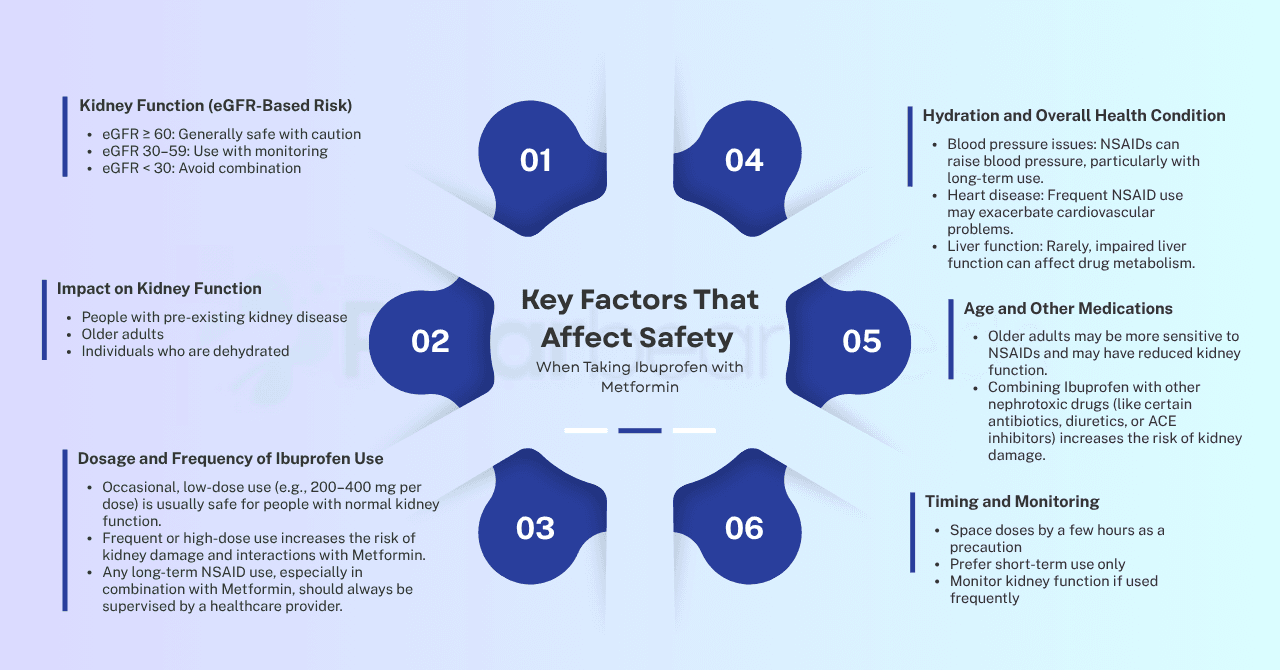
Key Factors That Affect Safety When Taking Ibuprofen with Metformin
When combining Metformin and Ibuprofen, several factors influence safety. Here’s what actually make a difference in real life.
Kidney Function (eGFR-Based Risk)
Both drugs affect kidney function. Clinical guidance uses eGFR (estimated glomerular filtration rate):
- eGFR ≥ 60: Generally safe with caution
- eGFR 30–59: Use with monitoring
- eGFR < 30: Avoid combination
Impact on Kidney Function
Both Metformin and Ibuprofen are processed through the kidneys. Ibuprofen can reduce kidney blood flow, which may impair Metformin clearance.
Who is at higher risk:
- People with pre-existing kidney disease
- Older adults
- Individuals who are dehydrated
Dosage and Frequency of Ibuprofen Use
- Occasional, low-dose use (e.g., 200–400 mg per dose) is usually safe for people with normal kidney function.
- Frequent or high-dose use increases the risk of kidney damage and interactions with Metformin.
- Any long-term NSAID use, especially in combination with Metformin, should always be supervised by a healthcare provider.
Hydration and Overall Health Condition
Adequate hydration is essential because dehydration reduces kidney perfusion, increasing the risk of complications. Other health factors to consider:
- Blood pressure issues: NSAIDs can raise blood pressure, particularly with long-term use.
- Heart disease: Frequent NSAID use may exacerbate cardiovascular problems.
- Liver function: Rarely, impaired liver function can affect drug metabolism.
Age and Other Medications
- Older adults may be more sensitive to NSAIDs and may have reduced kidney function.
- Combining Ibuprofen with other nephrotoxic drugs (like certain antibiotics, diuretics, or ACE inhibitors) increases the risk of kidney damage.
Timing and Monitoring
There is no strict FDA-approved timing rule, but:
- Space doses by a few hours as a precaution
- Prefer short-term use only
- Monitor kidney function if used frequently
Possible Side Effects of Combining Metformin and Ibuprofen
| Side Effect | What It Means |
|---|---|
| Kidney problems | Ibuprofen may reduce kidney blood flow, potentially affecting how Metformin is cleared from the body. |
| High blood pressure / Water retention | NSAIDs may cause fluid or salt buildup, raising blood pressure. |
| Stomach upset / Bleeding | Ibuprofen can irritate the stomach, cause nausea, ulcers, or bleeding, especially when used frequently. |
| Rare: Lactic acidosis | Metformin may build up if the kidneys don’t clear it properly, leading to lactic acid buildup. |
| Minor effects | Headache, dizziness, mild nausea. |
← Swipe to see more →
Safe Ways to Take Ibuprofen While on Metformin
Step 1: Use the Lowest Effective Dose
Take 200-400 mg per dose. Higher doses increase the risk of kidney strain and other side effects.
Step 2: Limit FrequencyOnly take Ibuprofen occasionally or for short-term relief. Long-term or frequent use can increase the risk of kidney problems and lactic acidosis.
Step 3: Stay HydratedDrink plenty of fluids to support your kidney function & reduce the risk of dehydration, which can amplify side effects.
Step 4: Monitor Kidney FunctionIf you need to use Ibuprofen regularly, ask your doctor for periodic kidney function tests (e.g., eGFR) to ensure safe clearance of both drugs.
Step 5: Consult Your Healthcare ProviderAlways check with your doctor or provider before taking Ibuprofen regularly, especially if you have kidney issues, are older, or take other medications that affect kidney function.
Alternatives to Ibuprofen for Pain Relief While Taking Metformin
| Pain Relief Option | Safe with Metformin? | Risks | Best Use Case |
|---|---|---|---|
| Acetaminophen (Paracetamol) | Yes | Liver strain if overdosed | Mild–moderate pain, fever |
| Ibuprofen/Naproxen (NSAIDs) | Risk, with caution | Kidney injury, lactic acidosis | Use caution, especially people with kidney issues |
| Topical creams (menthol, capsaicin) | Yes | Minimal systemic risk | Localized muscle/joint pain |
| Tramadol (Rx) | With caution | Dependency, side effects | Moderate pain under medical supervision |
| Aspirin (low dose) | Sometimes | Bleeding risk | Heart health, occasional pain |
← Swipe to see more →
Final Thoughts on Ibuprofen and Metformin Use
So, can you take Ibuprofen with Metformin? The answer is yes, but only with caution. Low-dose Ibuprofen may be used occasionally with Metformin if kidney function is normal, but only after consultation with a healthcare provider. Safer choices include acetaminophen for general pain or topical creams for localized relief. Always stay hydrated, monitor your health, and consult your doctor before combining these medications.
At Polar Bear Meds, we understand the complexities of managing diabetes and other health conditions. Our licensed Canadian pharmacy provides high-quality medications. Explore our services and let us help you achieve the right medication at the right time.
Medical Disclaimer: This content is for informational purposes only and does not replace any professional advice. Always consult a qualified healthcare provider before starting or combining medications.
Frequently Asked Questions
There is no specific required waiting time between Metformin and Ibuprofen. However, since both medications can affect kidney function, it’s generally advised to space them by a few hours as a precaution. This is especially important for people with existing kidney concerns. However, it’s always best to consult your doctor for personalized advice.
Yes, you can take Ibuprofen while on Metformin, but only occasionally and at low doses if your kidney function is normal. For safety, use the lowest effective dose, stay well-hydrated, and consult your doctor if you need to take Ibuprofen regularly or have any kidney-related concerns.
People with kidney disease, dehydration, or impaired kidney function should avoid taking Ibuprofen with Metformin. Older adults and those taking diuretics, ACE inhibitors, or other nephrotoxic drugs should also use caution. Individuals with heart disease, high blood pressure, or liver problems need extra care, as NSAIDs can worsen these conditions and increase health risks.
Avoid medications that may impair kidney function or interfere with Metformin clearance, such as NSAIDs (including high-dose Ibuprofen), certain diuretics, steroids, and some blood pressure medications. Always check with your healthcare provider for a full list of drugs to avoid.
While short-term use of Ibuprofen with Metformin is generally safe for most people. Long-term use of Ibuprofen should be avoided due to the risk of kidney damage and other complications. Always follow your doctor’s instructions when managing chronic pain with Metformin.


