Does Mounjaro (Tirzepatide) Cause Insomnia in Patients?
If you are wondering, does Mounjaro cause insomnia? The short answer is no. Insomnia is not listed as a common or direct side effect of Mounjaro (tirzepatide) in FDA-approved prescribing information. Instead, the most commonly reported side effects are gastrointestinal, such as nausea, diarrhea, and abdominal pain. However, some people still report Mounjaro insomnia or sleep disturbances during treatment.
These issues are not considered a direct effect of the medication but may occur due to changes in your body while using it. For example, adjustments in digestion, blood sugar levels, or weight can influence sleep patterns. Understanding this distinction is important. It helps you determine whether your symptoms are likely temporary or require medical attention, while also answering the core question clearly and accurately.
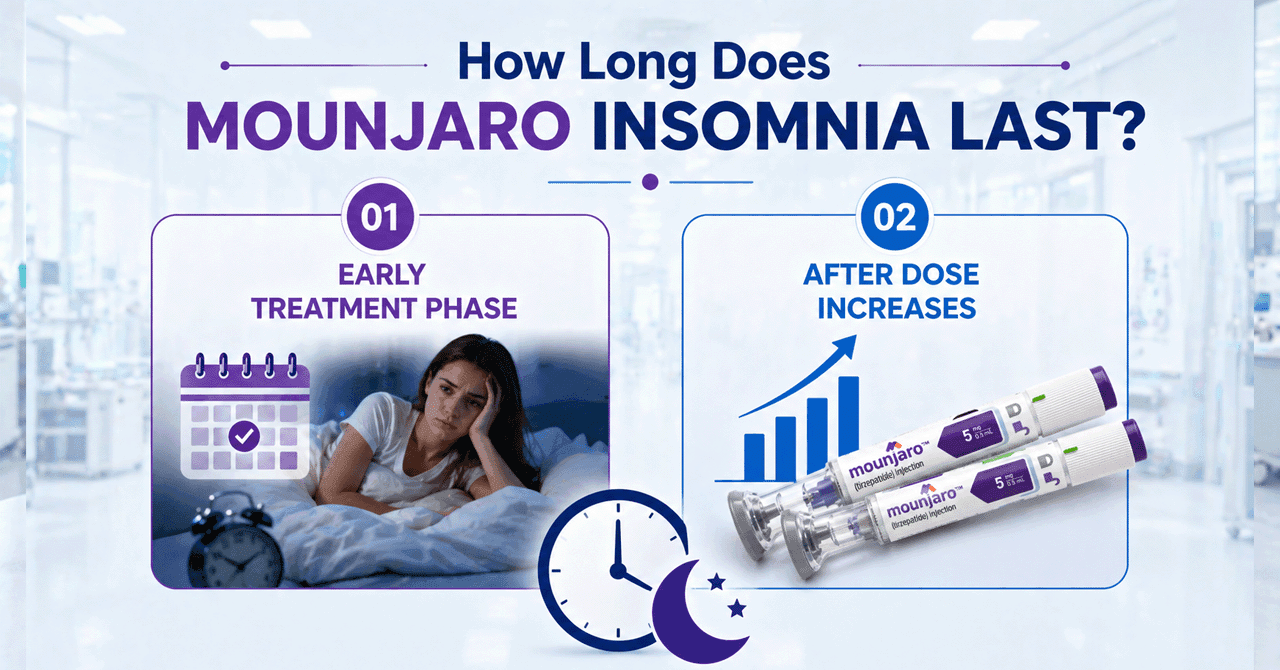
How Long Does Mounjaro Insomnia Last?
When insomnia occurs, it is usually temporary and linked to your body adjusting to treatment.
- Early treatment phase: Sleep issues may appear during the first few weeks after starting Mounjaro.
- After dose increases: Symptoms can return briefly when the dosage is increased.
If sleep problems persist beyond a few weeks, worsen, or affect daily functioning, they may not be related to Mounjaro alone and should be evaluated.
Why Do Some Patients Experience Insomnia on Mounjaro?
Some people report sleep disturbances during treatment, even though insomnia is not listed as a common side effect. These effects are usually linked to indirect factors rather than the medication itself.
Gastrointestinal Side Effects That Disrupt Sleep
Mounjaro commonly causes gastrointestinal symptoms such as nausea, diarrhea, and abdominal discomfort. These are among the most frequently reported side effects. If these symptoms occur at night, they can make it harder to fall asleep or stay asleep. This is one of the most practical explanations behind mounjaro sleep side effects.
Blood Sugar Changes During the Night
Mounjaro affects blood sugar regulation. When used with insulin or certain diabetes medications, it may increase the risk of hypoglycemia. Low blood sugar at night can cause symptoms such as restlessness, sweating, or sudden waking, which may feel like disrupted sleep.
Weight Loss and Metabolic Changes
According to StatPearls (NCBI Bookshelf), Tirzepatide improves blood sugar control and supports weight loss through hormonal and metabolic effects. As your body adjusts to these changes, your sleep pattern may temporarily shift. Some people may notice lighter sleep or changes in sleep quality during this adjustment phase.
Lifestyle or External Sleep Disruptors
Not all sleep issues during treatment are caused by the medication. Factors like caffeine intake, stress, irregular sleep schedules, or screen exposure can also affect sleep quality. This is why the question “does Mounjaro affect sleep?” often involves multiple factors, not just the medication itself.
How to Manage Mounjaro Sleep Issues
Managing sleep issues means addressing the specific triggers that occur during treatment, especially gastrointestinal symptoms and blood sugar changes.
| What’s Affecting Your Sleep | How to Manage It |
|---|---|
| Nighttime nausea or stomach discomfort | Avoid late or heavy meals and allow enough time for digestion before bed |
| Nighttime blood sugar changes | Keep consistent meal timing and watch for symptoms like sweating or sudden waking |
| Ongoing dose adjustments | Expect short-term changes and track sleep patterns after each dose increase |
| Disrupted sleep schedule | Maintain a fixed sleep and wake time daily to stabilize your sleep cycle |
| Stimulants or screen exposure at night | Reduce caffeine intake and limit screen use in the evening |
← Swipe to see more →
These adjustments directly target the most common causes behind mounjaro sleep issues and help improve sleep without interrupting your treatment.
When Should You Be Concerned About Insomnia on Mounjaro?
Persistent or severe sleep disturbances may need medical attention, especially if they are linked with other symptoms.
- Sleep problems start affecting your daily functioning
- You experience severe nausea, vomiting, or ongoing abdominal pain
- You notice symptoms of low blood sugar, such as dizziness, sweating, or shakiness
- Sleep issues worsen after dose adjustments instead of improving
The MedlinePlus data also advises contacting a healthcare provider if you experience unusual or persistent side effects while using Tirzepatide.
The Bottom Line: Does Mounjaro Cause Insomnia?
Mounjaro is not associated with insomnia as a common side effect in FDA data. However, some people may experience temporary sleep changes during treatment, often linked to factors such as gastrointestinal symptoms or blood sugar fluctuations rather than the medication itself. These effects are typically short-term and tend to improve as the body adjusts.
If sleep issues continue or become severe, a medical evaluation is recommended to identify the underlying cause and ensure safe treatment. If you are considering Mounjaro, it is important to speak with a licensed healthcare provider to determine whether it is appropriate for you and how to use it safely.
Frequently Asked Questions
No, insomnia is not listed as a common side effect in FDA prescribing information, although some people report temporary sleep disturbances.
Mounjaro can affect sleep indirectly. Factors like gastrointestinal symptoms or blood sugar changes may disrupt sleep, but this is not a direct pharmacological effect.
GLP-1 medications, including Tirzepatide, are not known to directly cause insomnia. Reported sleep issues are typically linked to indirect factors rather than the medication itself.
If you are experiencing mounjaro sleep issues, they may be related to factors such as nausea, nighttime blood sugar changes, or metabolic changes rather than a direct side effect.
Improving sleep on Mounjaro involves managing triggers such as late meals, irregular sleep schedules, or caffeine intake. Addressing these factors can help reduce mounjaro sleep side effects.
Zepbound contains the same active ingredient as Mounjaro (tirzepatide). Similar to Mounjaro, Zepbound insomnia is not a common side effect but may occur due to indirect factors.
Medical Disclaimer
This blog is provided for informational purposes only and does not replace expert medical guidance, diagnosis, or treatment. The information is based on trusted sources such as the FDA and National Library of Medicine, but individual responses may vary. Always consult an authorized healthcare professional before making treatment decisions.