Does Remeron Cause Weight Gain?
Key Takeaways
- Mirtazapine (Remeron) frequently causes weight gain because it acts as a powerful appetite stimulant.
- The medication blocks the Histamine H1 receptor, triggering food cravings and mild sedation, making it easy to consume more calories while moving less.
- While weight changes vary by individual, clinical data indicate that gaining 7% or more of your body weight is considered significant.
- You can limit or avoid weight gain by tracking your daily calories, prioritizing high-protein meals, and maintaining a light exercise routine.
Key Takeaways:
If you’re wondering, does Remeron cause weight gain? The short answer is yes. Weight gain is a recognized and common side effect of mirtazapine, often linked to increased appetite and changes in eating behavior. According to FDA prescribing information, the drug acts as a powerful appetite stimulant. That said, not everyone experiences this effect. Your weight change depends on factors like diet, activity level, dose, and how your body responds to the medication.
Why Does Remeron Cause Weight Gain?
Remeron weight gain mainly happens because it alters how your body regulates hunger and energy. Mirtazapine actively blocks the Histamine H1 receptor, a mechanism directly associated with increased appetite and sedation. The NCBI StatPearls database states that these effects can make you feel hungrier while simultaneously reducing your physical activity. When medication-induced sleepiness is paired with a higher calorie intake over time, weight gain becomes a common outcome.

How Much Weight Gain Can Remeron Cause?
The amount of weight you might gain on mirtazapine varies, but the changes are often noticeable and sometimes significant.
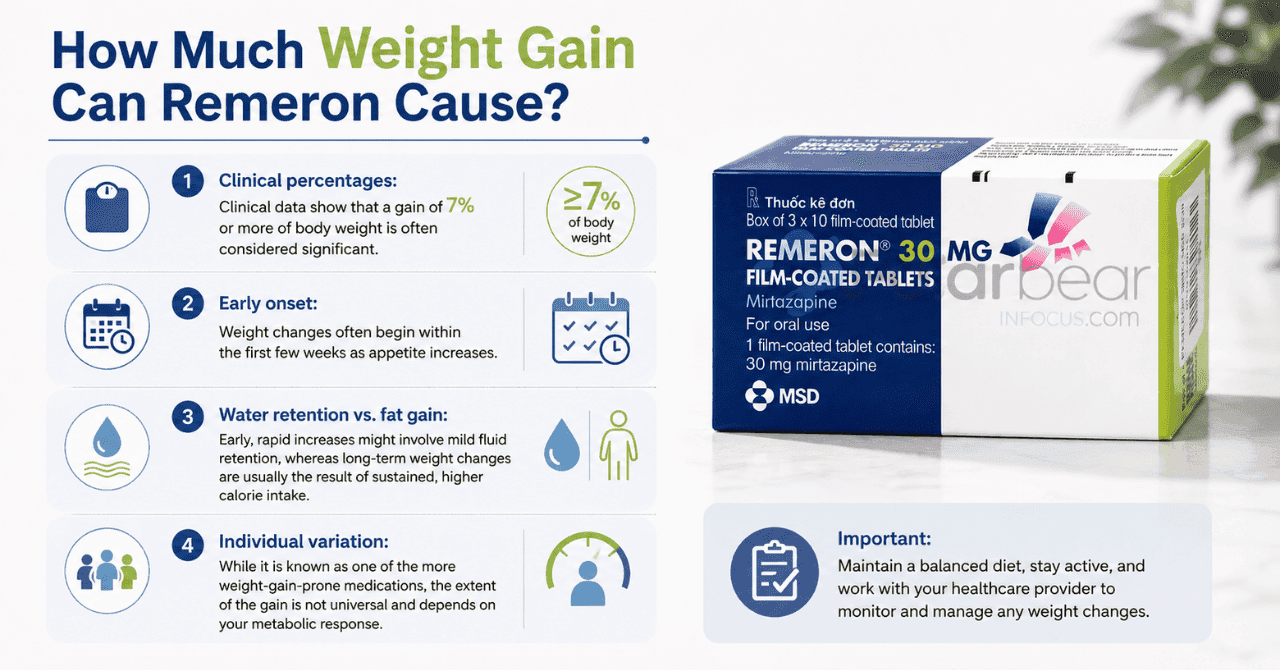
- Clinical percentages: Clinical data show that a gain of 7% or more of body weight is often considered significant.
- Early onset: Weight changes often begin within the first few weeks as appetite increases.
- Water retention vs. fat gain: Early, rapid increases might involve mild fluid retention, whereas long-term weight changes are usually the result of sustained, higher calorie intake.
- Individual variation: While it is known as one of the more weight-gain-prone medications, the extent of the gain is not universal and depends on your metabolic response.
Can Remeron (Mirtazapine) Cause Weight Loss Instead?
Weight loss on Remeron is uncommon, but it can occur in some cases, usually early in treatment.
- Some people may experience temporary weight loss due to reduced appetite or initial adjustment to the medication.
- The National Library of Medicine (NLM) shows that mirtazapine is more consistently associated with increased appetite and weight gain, making weight loss less likely overall.
- These early changes are typically short-term and tend to reverse as appetite increases.
- Over time, Mirtazapine weight gain becomes more common than weight loss.
How to Avoid Weight Gain on Remeron?
If you are thinking about how to avoid weight gain on Remeron, the most effective approach combines mindful eating with daily habit tracking to counter the medication's side effects.
| Strategy | What You Should Do | Why It Helps |
|---|---|---|
| Manage calorie intake | Focus on high-protein, high-fiber foods and limit processed sugars | Helps control increased appetite linked to Remeron |
| Stay physically active | Aim for regular movement, even light exercise like walking | Counter sedation and help balance calorie intake |
| Monitor weight regularly | Track weekly changes and adjust habits early | Prevents gradual, unnoticed weight gain |
| Maintain sleep routine | Keep consistent sleep patterns and avoid late-night eating | Reduces risk of excess calorie intake |
← Swipe to see more →
When to Consult a Doctor About Remeron Weight Gain?
While some weight fluctuation is expected, you should speak with your healthcare provider if Remeron weight gain becomes unmanageable or starts affecting your overall well-being. Reach out to your doctor if you experience:
- Rapid increases: Sudden or significant weight gain over a short period.
- Uncontrollable hunger: A persistent, increased appetite that feels impossible to manage despite dietary changes.
- Health shifts: Concerns related to broader metabolic changes, such as new issues with cholesterol or blood sugar levels.
The Bottom Line: Can Remeron Cause Weight Gain?
To answer the question clearly, yes, mirtazapine often leads to weight gain because of increased hunger and mild sedation. However, these physical changes are entirely manageable. By tracking your daily diet, staying active, and talking openly with your doctor, you can handle these side effects while focusing on your mental health. If your healthcare provider has officially prescribed this medication for your treatment, ensure you obtain it from a licensed and reliable source.
Frequently Asked Questions
Remeron weight gain can begin within the first few weeks, often starting with increased appetite. In many cases, noticeable weight changes develop gradually over weeks to months as calorie intake increases.
The amount varies. Some people gain only a few pounds, while others may experience more noticeable increases. In research, a gain of around 7% of body weight is considered significant, but not everyone reaches this level.
No, not everyone experiences weight gain. Individual factors such as metabolism, diet, activity level, and treatment duration all influence how your body responds.
Yes, even low doses like 7.5 mg can cause weight gain. While some people assume higher doses increase risk, dose-dependent weight gain is not always predictable with mirtazapine.
No, Remeron weight gain is not always permanent. It may stabilize over time or improve with lifestyle changes or medical adjustments under a healthcare provider’s guidance.
Early weight changes may involve water retention vs. fat gain, but long-term weight gain is typically related to increased calorie intake and fat accumulation.
Medical Disclaimer
This blog is provided for informational purposes only and does not replace expert medical guidance, diagnosis, or treatment. The content is based on trusted sources, including U.S. Food and Drug Administration (FDA) prescribing information, National Library of Medicine (NLM) resources such as MedlinePlus and StatPearls, and peer-reviewed research from PubMed Central (PMC), but individual responses may vary. Always consult an authorized healthcare professional before making treatment decisions.