How Does Semaglutide Affect Blood Sugar? A 2026 Guide for US Patients
Key Takeaways
- Semaglutide lowers glucose in three ways: more insulin when sugar is high, less glucagon, and slower stomach emptying.
- In the FDA label's main diabetes trial, HbA1c fell 1.4% to 1.6% in 30 weeks, compared with 0.1% on placebo.
- Sugar still raises your blood glucose on semaglutide, but the after-meal spike is smaller.
- Lows are uncommon on semaglutide alone but much more likely when it is combined with insulin or a sulfonylurea.
- The lift many people feel likely comes from steadier glucose and quieter food cravings.
Semaglutide lowers blood sugar by helping your pancreas release insulin only when glucose runs high, which is why it rarely causes lows on its own. It also slows digestion and calms the liver's sugar output. So how does semaglutide affect blood sugar day to day? Here's what happens after meals, after sweets, and in your mood.
How Semaglutide Lowers Blood Sugar: The 3 Key Mechanisms
Semaglutide copies GLP-1, a gut hormone your body releases after meals. Natural GLP-1 lasts only minutes, but semaglutide has a half-life of about one week. That steady weekly activity is what makes semaglutide and glucose control so consistent from day to day.
The semaglutide GLP-1 mechanism works in three ways:
- Insulin release only when glucose is high. Semaglutide tells the pancreas to release insulin in a glucose-dependent way. When blood sugar returns to normal, the push fades. This built-in brake is why it rarely causes lows on its own.
- Less glucagon. Glucagon tells the liver to release stored sugar. Semaglutide lowers glucagon both before and after meals, which brings fasting readings down.
- Slower stomach emptying. Semaglutide delays how fast food leaves the stomach right after a meal. Sugar from that meal enters the blood more gradually, so the post-meal glucose spike is lower and flatter.
Semaglutide Blood Sugar Levels: What the FDA Label Shows
The Ozempic prescribing information gives clear numbers for each effect. In semaglutide type 2 diabetes trials, every measure of glucose improved.
| What Changed | Semaglutide Result | Compared With |
|---|---|---|
| Fasting glucose | Down 29 mg/dL (22%) on 1 mg after 12 weeks | Placebo |
| 2-hour post-meal glucose | Down 74 mg/dL (36%) on 1 mg after 12 weeks | Placebo |
| 24-hour glucagon | Down 12% | Placebo |
| HbA1c (0.5 mg and 1 mg) | Down 1.4% and 1.6% at 30 weeks | Placebo: down 0.1% |
| HbA1c (2 mg) | Down 2.1% at 40 weeks | 1 mg: down 1.9% |
← Swipe to see more →
Those HbA1c drops matter for long-term health. A large UK diabetes study found that every 1% fall in HbA1c was linked to 21% fewer diabetes-related deaths and 37% fewer small blood vessel complications, such as eye and kidney damage.
What Happens If You Eat Sugar While Taking Semaglutide?
Your blood sugar still rises, but less sharply than it would without the drug. Semaglutide does not block sugar absorption. It softens the spike and helps bring glucose back down faster.
When you eat a sugary meal, three things happen at once. Your pancreas releases more insulin in response to the rising glucose. Your liver gets a weaker glucagon signal. Your stomach empties more slowly, so the sugar arrives in smaller waves. That combination explains the 36% smaller post-meal rise seen in the label data above.
Can You Eat Whatever You Want on Semaglutide?
No. Eating sugar while taking semaglutide still adds up. Large or frequent sugary meals keep post-meal glucose high, and over months that pushes HbA1c back up.
Many people find their taste for very sweet or rich food fades on semaglutide. Heavy, sugary meals are also a common trigger for nausea, especially after a dose increase. The drug works best alongside meals built around protein, fibre, and fewer added sugars. If you take Ozempic for type 2 diabetes, your doctor may suggest checking your glucose after meals for the first few weeks so you can see how your body responds.
What Is the Semaglutide Hypoglycemia Risk?
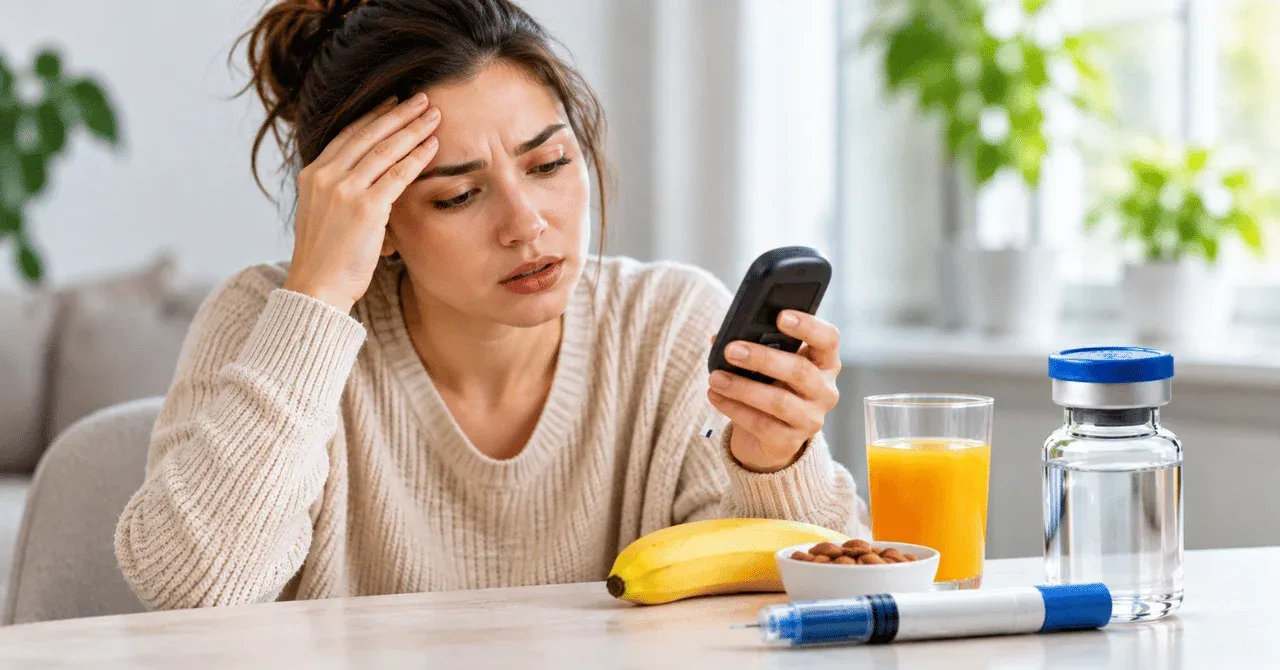
The semaglutide hypoglycemia risk is low when you take it on its own and much higher when you combine it with insulin or a sulfonylurea. Those older drugs push insulin out no matter what your blood sugar is, so the glucose-dependent brake no longer protects you.
The Ozempic label shows the gap clearly:
- Semaglutide alone: 1.6% of people on 0.5 mg and 3.8% on 1 mg had a documented low, with no severe cases.
- With a sulfonylurea (such as glipizide or glimepiride): 17.3% on 0.5 mg and 24.4% on 1 mg had a documented low.
- With basal insulin: 16.7% on 0.5 mg and 29.8% on 1 mg, compared with 15.2% on placebo.
For this reason, the label advises doctors to consider lowering the sulfonylurea or insulin dose when semaglutide starts. Watch for shakiness, sweating, a fast heartbeat, dizziness, hunger, or confusion. The CDC's 15-15 rule is the standard first step: take 15 grams of fast-acting carbs, wait 15 minutes, and recheck. Repeat if your reading is still under 70 mg/dL, and call your doctor if lows keep happening.
Why Do I Feel So Good on Semaglutide?
Most people who search "why do I feel good on semaglutide" are noticing two things: steadier energy and a quieter mind around food. Both have a reasonable explanation, and neither depends only on the number on the scale.
Steadier Blood Sugar Means Fewer Crashes
High blood sugar and big swings after meals often bring fatigue, brain fog, and sudden hunger. When semaglutide flattens those swings, many people feel more even energy through the day. For people with type 2 diabetes, this effect can show up before much weight comes off.
Less "Food Noise"
GLP-1 drugs act on the hypothalamus, the part of the brain that controls hunger and fullness. Patients often describe this as "food noise" going quiet, meaning fewer constant thoughts about the next meal or snack. Early research, much of it in animals, suggests these drugs also soften the brain's reward response to tempting food.
What Research Says About Mood
A 2025 meta-analysis of 80 randomized trials with nearly 108,000 adults found no increase in psychiatric side effects with GLP-1 drugs. People on them also showed small improvements in mental health-related quality of life and in emotional eating. In January 2026, the FDA asked drugmakers to remove the suicidal thoughts warning from GLP-1 weight loss drug labels after its own review found no added risk.
Not everyone has the same experience. Some people report feeling flat or less interested in things they used to enjoy. Tell your doctor about any lasting change in mood or motivation.
Final Thoughts on How Does Semaglutide Affect Blood Sugar
The short answer to "how does semaglutide affect blood sugar" is that it works with your body instead of overriding it. It adds insulin only when glucose is high, trims the liver's sugar output, and slows digestion, which lowers both daily readings and HbA1c. It cannot cancel out a high-sugar diet, and it needs extra care when combined with insulin or a sulfonylurea.
If cost is what stands between you and treatment, Polar Bear Meds can help. US patients can order Health Canada-approved generic semaglutide pens at a lower cost than US brand prices. Every order requires a valid prescription.
Frequently Asked Questions
Only slightly. Because the insulin effect is glucose-dependent, it does little when your sugar is already normal, and lows are rare. People without diabetes usually take semaglutide as Wegovy for weight management, where the main effects are lower appetite and weight loss.
Fasting and after-meal readings often start to improve within the first few weeks. Semaglutide reaches steady state in the body after 4 to 5 weeks of weekly doses, and the dose usually rises every 4 weeks. HbA1c, which reflects about three months of readings, shows the full effect after several months.
Yes, and in two directions. Alcohol can cause low blood sugar by blocking the liver from releasing stored glucose, which adds to semaglutide's glucagon-suppressing effect. It can also raise blood sugar when consumed in large amounts or in sugary mixers. The FDA prescribing information advises patients to discuss alcohol use with their doctor, particularly if they also take insulin or a sulfonylurea.
Semaglutide itself does not raise blood sugar. However, skipping a dose, overeating, being sick, or under unusual stress can push glucose up regardless of what medication you take. If you miss a dose, take it as soon as you remember, as long as your next scheduled dose is more than two days away. If it is closer than that, skip the missed dose and stay on your regular schedule. Do not double up.
No research shows that Ozempic causes a body odor others can detect. What some people notice is burping, sometimes with a sulfur smell or taste, because food stays in the stomach longer. Burping affected up to 2.7% of people on Ozempic in trials, compared with none on placebo. Our guide to Ozempic burping covers simple fixes.
Yes, as part of overall fat loss. Semaglutide does not target the belly directly, but people who lose weight on it usually see a smaller waist too. Our semaglutide peptide guide covers the belly fat and visceral fat data in detail.
Disclaimer
This article is for informational purposes only and is not a substitute for professional medical advice, diagnosis, or treatment. Talk to your doctor before you start, stop, or change any medication, including semaglutide. If you take insulin or a sulfonylurea, ask your doctor how to adjust your doses and monitor your blood sugar.