Humulin vs. Novolin: What's the Difference Between Them?
Key Takeaways:
- Humulin and Novolin use the exact same types of human insulin, including Regular and NPH insulin.
- Both share identical standard timelines for onset, peak, and duration based on CDC classifications.
- Despite being biological twins, they are distinct brand-name drugs and are not automatically interchangeable.
- Mixing different brands in the same syringe is strictly advised against by official prescribing guidelines.
- Your prescription, insurance coverage, and healthcare provider’s guidance determine the right choice.
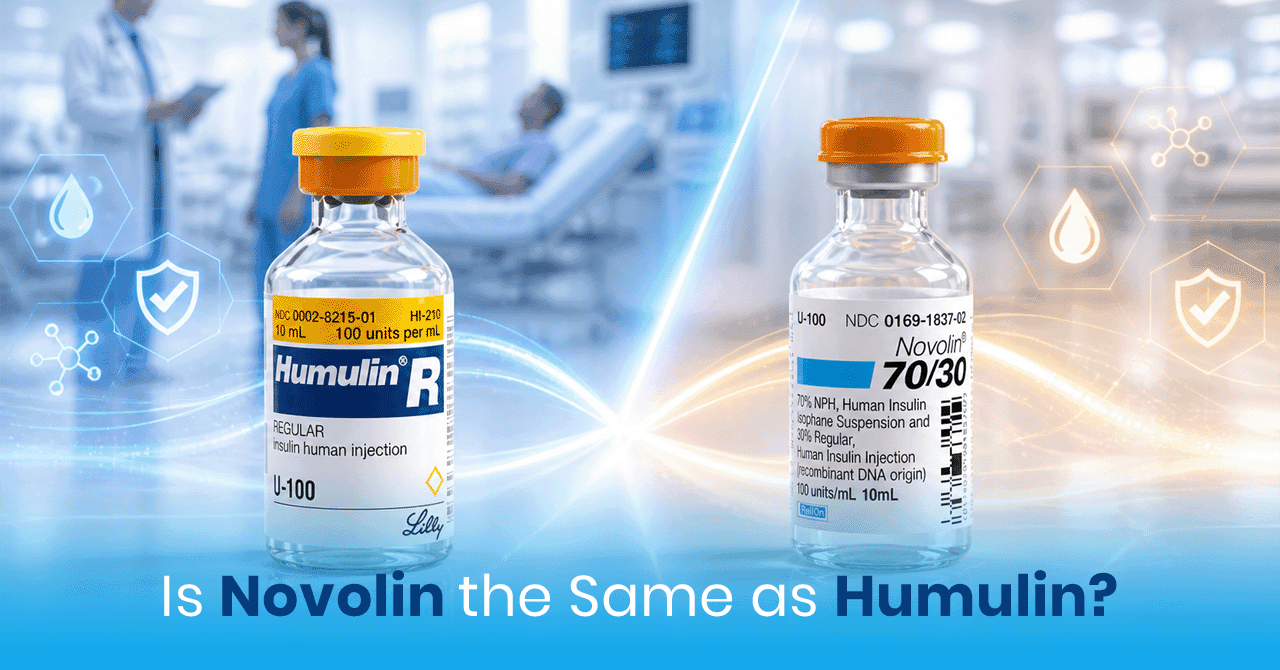
When comparing Humulin vs. Novolin, the debate comes down to the manufacturer. Both contain the exact same active ingredients to manage blood glucose levels, such as Regular human insulin and NPH insulin, but are manufactured by different companies.
According to the European Endocrinology journal, these formulations were strictly developed as bioequivalent products, meaning they act identically in the body. Despite being biological twins, safely swapping them at the pharmacy isn't always automatic.
Is Novolin the Same as Humulin?
Humulin and Novolin use the same types of human insulin, but they are not fully identical products. Because they are complex biologic drugs, they are classified as distinct brand-name medications rather than direct generic equivalents. The main physical difference lies in their inactive ingredients, like the specific buffers and preservatives used to stabilize the liquid.
Whereas FDA guidelines on insulin substitution state that one brand may replace another on a unit-per-unit basis during an emergency, these minor chemical variations are exactly why routine swapping requires medical approval.
Humulin vs. Novolin: Onset, Duration, and How You Use Them
Both medications use the exact same synthetic human insulin formulas; you do not need to learn a new schedule if you switch brands. According to CDC guidelines on insulin types, Humulin and Novolin share the exact same standardized timelines for onset, peak, and duration.
Short-Acting Insulin (Humulin R & Novolin R)
These "Regular" mealtime insulins are typically injected 30 to 60 minutes before eating to manage immediate blood glucose spikes.
| Feature | Timeline for Both Brands |
|---|---|
| Onset | 30 minutes |
| Peak | 2 to 3 hours |
| Duration | 3 to 6 hours |
← Swipe to see more →
Intermediate-Acting Insulin (Humulin N & Novolin N)
These "NPH" formulations provide baseline background control, usually covering insulin needs for half a day or overnight.
| Feature |
|---|
| Timeline for Both Brands |
| Onset |
| 2 to 4 hours |
| Peak |
| 4 to 12 hours |
| Duration |
| 12 to 18 hours |
← Swipe to see more →
Pre-Mixed Insulin (Humulin 70/30 & Novolin 70/30)
Combining 70% intermediate (NPH) and 30% short-acting (Regular), this mix is typically taken 10 to 30 minutes before breakfast and dinner for a simpler dosing schedule.
| Feature |
|---|
| Timeline for Both Brands |
| Onset |
| 5 to 60 minutes |
| Peak |
| Peaks vary |
| Duration |
| 10 to 16 hours |
← Swipe to see more →
Humulin vs. Novolin Side Effects
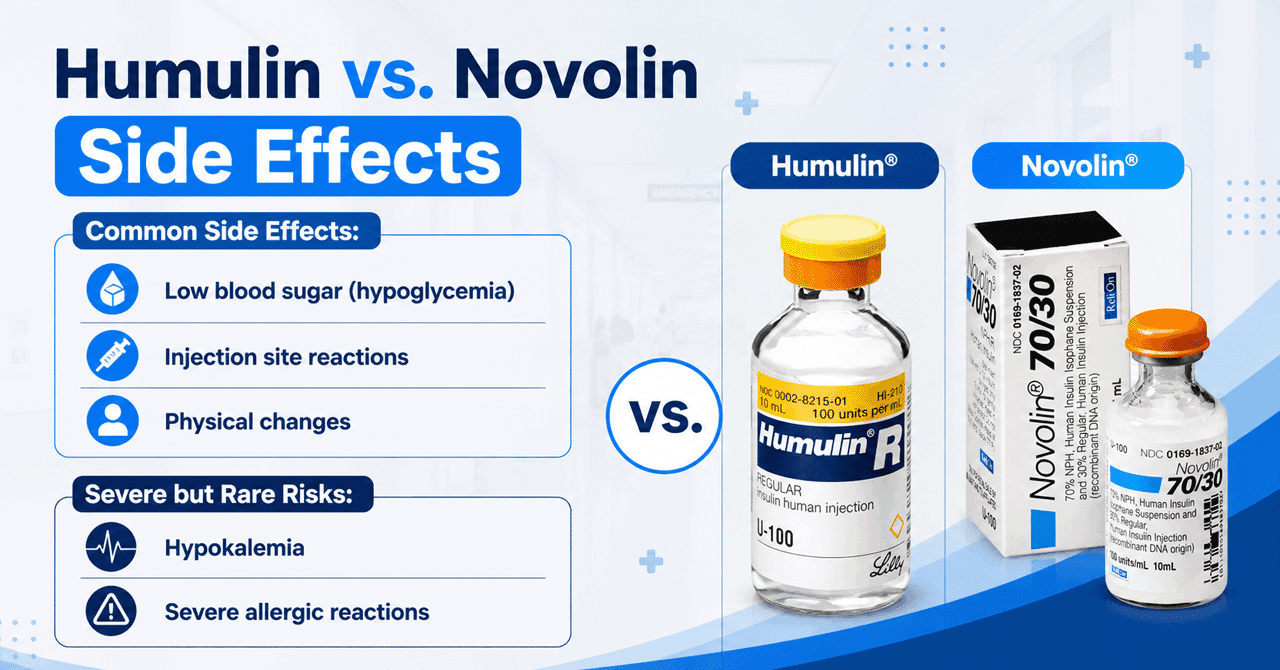
Humulin and Novolin share an identical side effect profile. The official prescribing data show that hypoglycemia is the most common adverse reaction associated with both medications.
Common Side Effects:
- Low blood sugar (hypoglycemia): Can cause dizziness, sweating, confusion, and a fast heartbeat.
- Injection site reactions: May include redness, swelling, pain, or skin thickening (lipodystrophy).
- Physical changes: Unintentional weight gain and swelling in the hands or feet (edema).
Severe but Rare Risks:
- Hypokalemia: Dangerously low potassium levels in the blood.
- Severe allergic reactions: Full-body rashes, trouble breathing, or anaphylaxis.
Can You Take Humulin and Novolin Together?
No, you should never mix Humulin and Novolin in the same syringe. While they are both human insulins, official prescribing guidelines strictly advise against cross-mixing brands. For instance, the FDA administration instructions explicitly state that Humulin R must only be mixed with Humulin N, and not with other insulin preparations.
Mixing different brands can alter the formulation and how the medication is absorbed, leading to unpredictable and potentially dangerous shifts in your blood sugar. If your treatment plan requires combining a short-acting and intermediate-acting insulin in one injection, always stick to matching brands.
The Bottom Line: Choosing Between Humulin and Novolin
Choosing between these two legacy insulins comes down to insurance formulary, pharmacy availability, and your endocrinologist's guidance. While they contain the exact same active human insulin and share identical CDC timelines for blood sugar management. Their minor differences in inactive ingredients mean they cannot be swapped casually at the pharmacy counter.
To maintain predictable glucose control, always stick to the specific brand your doctor prescribes, never mix the two brands in a single syringe, and consult your healthcare provider and browse our trusted options below.
Frequently Asked Questions
Routine swapping is not recommended without medical approval. Because they are complex biologic drugs with different inactive ingredients, pharmacists cannot automatically interchange them for you without a new prescription.
Substitution should only be done under medical supervision. According to FDA guidance, switching may be done on a unit-per-unit basis in emergency situations, but close monitoring of blood glucose levels is required.
You should never cross-mix different brands in the same syringe. For example, Humulin R should only be combined with Humulin N. Mixing it with Novolin N can cause unpredictable chemical reactions.
The most common risk for any subcutaneous injection of human insulin is low blood sugar (hypoglycemia). Other risks include injection site reactions, weight gain, and in rare cases, dangerously low potassium levels.
Medical Disclaimer
This blog is provided for informational purposes only and does not replace expert medical guidance, diagnosis, or treatment. The content is based on trusted sources, including U.S. Food and Drug Administration (FDA) prescribing information, Centers for Disease Control and Prevention (CDC) data, and peer-reviewed research from the National Library of Medicine (NLM), but individual responses may vary. Always consult an authorized healthcare professional before making treatment decisions.