Jardiance vs. Ozempic: Which is Better for Type 2 Diabetes?
Key Takeaways:
- Ozempic generally lowers A1C more effectively than Jardiance.
- Jardiance offers stronger heart and kidney protection benefits.
- Jardiance is approved for adults and children aged 10 and older, whereas Ozempic is only for adults.
- Both medications work differently and can be taken together under medical supervision.
- The best choice depends on your individual health condition and treatment goals.
If you are comparing Jardiance vs. Ozempic, the short answer is this: Ozempic generally provides greater A1C reduction, whereas Jardiance is often preferred for heart and kidney benefits. Both treat type 2 diabetes effectively, but work differently and are chosen based on individual health needs.
The CDC guidance states that GLP-1 receptor agonists and SGLT2 inhibitors both improve blood sugar control and provide heart and kidney benefits. Because they work through different mechanisms, they can also be prescribed together when needed.
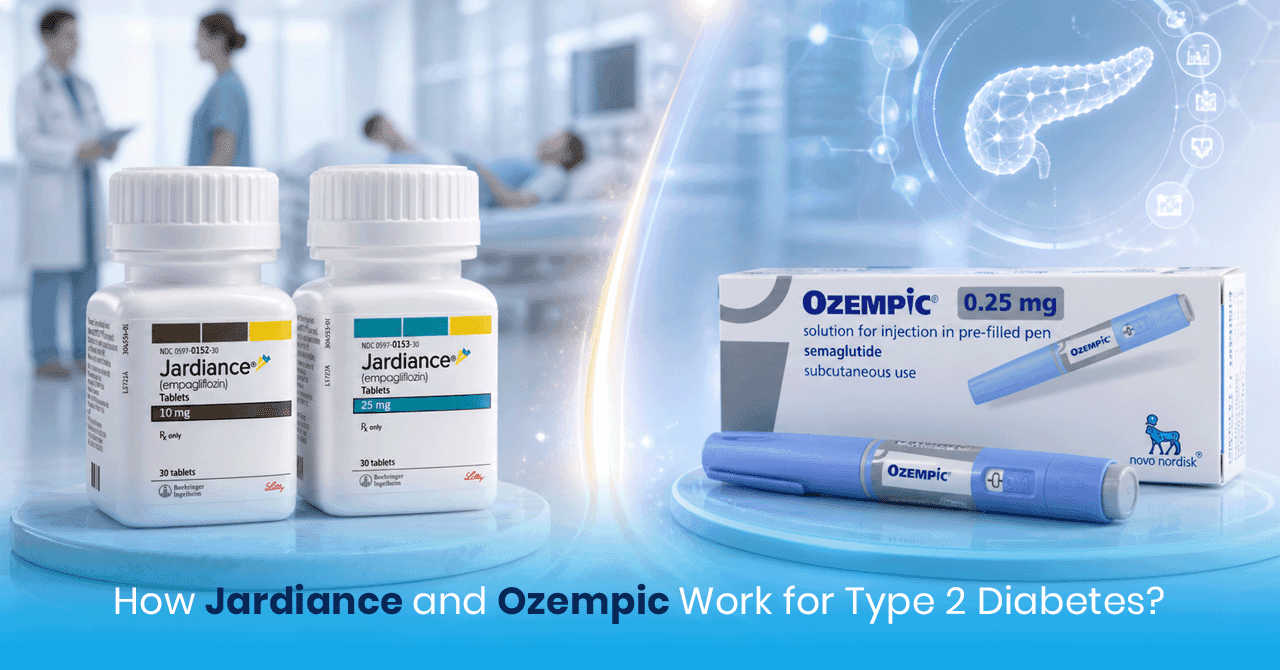
How Jardiance and Ozempic Work for Type 2 Diabetes
The difference between Jardiance and Ozempic comes down to how each medication lowers blood sugar in your body. Jardiance helps your kidneys remove excess glucose through urine, which directly reduces blood sugar levels. FDA prescribing information shows that empagliflozin is used to reduce the risk of cardiovascular death, hospitalization for heart failure, and progression of kidney disease in adults.
Ozempic works differently as a GLP-1 receptor agonist. It increases insulin release when your blood sugar is high and slows digestion, which helps control glucose levels and reduce appetite. The difference in mechanism explains why these medications are chosen based on individual treatment goals rather than one being universally better.
Jardiance vs. Ozempic: Comparing Blood Sugar Control for Type 2 Diabetes
If your goal is stronger blood sugar control and A1C reduction, Ozempic (Semaglutide) generally performs better than Jardiance (Empagliflozin), making it a stronger option for glucose control. According to the PMC meta-analysis, a patient-level meta-analysis of Empagliflozin vs. Semaglutide showed that semaglutide reduced HbA1c by about 0.61% more than empagliflozin.
| Factor | Ozempic (Semaglutide) | Jardiance (Empagliflozin) |
|---|---|---|
| A1C Reduction | Higher reduction (~0.61% more) | Moderate reduction |
| Blood Sugar Control | Strong, especially for higher A1C levels | Effective but less aggressive |
| Overall Effectiveness | More potent for glucose-lowering | Balanced effect with other benefits |
← Swipe to see more →
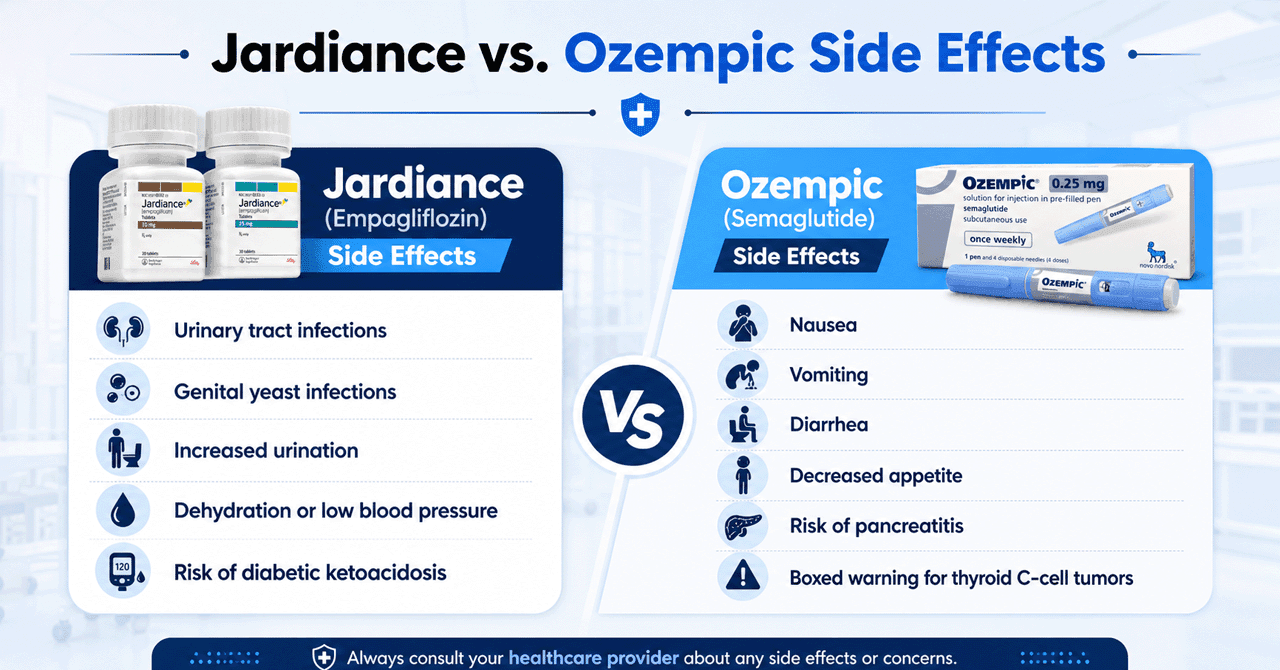
Jardiance vs. Ozempic Side Effects
Side effects differ based on how each drug works, especially when comparing Ozempic vs. Jardiance for type 2 diabetes.
Jardiance (Empagliflozin) Side Effects:
- Urinary tract infections
- Genital yeast infections
- Increased urination
- Dehydration or low blood pressure
- Risk of diabetic ketoacidosis
Ozempic (Semaglutide) Side Effects:
- Nausea
- Vomiting
- Diarrhea
- Decreased appetite
- Risk of pancreatitis
- Boxed warning for thyroid C-cell tumors
Jardiance side effects are mostly infection-related due to increased glucose in urine, whereas Ozempic side effects are primarily gastrointestinal.
Can You Take Jardiance and Ozempic Together?
Yes, combining these two medications is a common approach when stronger glucose control is needed. Instead of viewing this as a Jardiance vs. Ozempic choice, healthcare providers often prescribe both because they tackle high blood sugar from different angles without overlapping mechanisms.
Taking these type 2 diabetes medications together can offer combined cardiovascular benefits, improved A1C reduction, and further support for weight management. Combining a GLP-1 receptor agonist with an SGLT2 inhibitor is commonly used; however, it requires medical supervision to monitor risks such as dehydration or low blood sugar.
The Bottom Line: Choosing Between Jardiance and Ozempic
Choosing between these two options comes down to what matters most in your treatment plan. Ozempic tends to be the stronger choice for significant A1C reduction and weight management, whereas Jardiance shines in providing targeted protection for the heart and kidneys. Both are widely used type 2 diabetes medications and, in some cases, may even be prescribed together for complementary benefits. If you have a prescription and are considering your options, you can explore trusted sources to access your medication safely and conveniently.
Frequently Asked Questions
No. Jardiance (empagliflozin) is an SGLT2 inhibitor, not a GLP-1 receptor agonist like Ozempic (semaglutide).
In this comparison, Ozempic generally provides stronger A1C reduction, while Jardiance is often preferred for its cardiovascular and kidney protection benefits. The better option depends on your specific health profile and treatment goals.
GLP-1 receptor agonists like Ozempic are typically more effective for weight management because they reduce appetite and slow digestion, whereas SGLT2 inhibitors generally offer only modest weight reduction.
Jardiance can cause mild weight loss, but it is usually less significant than with Ozempic. Jardiance works by flushing out excess glucose through urine, whereas Ozempic actively suppresses your appetite.
The most common downside is an increased risk of urinary tract and genital yeast infections due to the extra glucose passing through your urine. Dehydration and low blood pressure can also occur in some patients.
While Jardiance actually provides long-term kidney protection for many, its mechanism of flushing glucose through the urinary tract means it directly involves the kidneys. Because of this, it requires caution and monitoring in people with severe kidney impairment.
Neither is universally safer; they simply carry different risks. Jardiance is associated more with infection-related risks and dehydration, while Ozempic is linked to gastrointestinal side effects and specific warnings regarding thyroid tumors. Safety always depends on your individual medical history.
Yes, switching from Jardiance to Ozempic is possible, but only under strict medical guidance. Your doctor will manage this switch based on your current blood sugar control, side effects, and overall health.
No. Both are non-insulin treatments for type 2 diabetes. Your healthcare provider may prescribe them alongside insulin if additional blood sugar control is necessary.
Jardiance begins to remove glucose from your body quickly, but noticeable improvements in your blood sugar levels and full A1C reduction can take a few weeks to a few months of consistent use.
Ozempic begins working within the first few weeks, but its full effect on managing blood sugar and promoting weight changes is typically seen after a few months of use.
Medical Disclaimer
This blog is provided for informational purposes only and does not replace expert medical guidance, diagnosis, or treatment. The content is based on trusted sources, including U.S. Food and Drug Administration (FDA) prescribing information, Centers for Disease Control and Prevention (CDC) data, and peer-reviewed research from the National Library of Medicine (PubMed), but individual responses may vary. Always consult an authorized healthcare professional before making treatment decisions.