Patient Assistance Program in 2026: What Happens If You Move to Another State?
Moving to another state does not automatically end your participation in a Patient Assistance Program in 2026. However, a change of address, new healthcare providers, Medicaid eligibility updates, and state-specific assistance rules can affect how quickly you receive medication. Taking a few steps before and after your move can help reduce the risk of prescription delays and coverage interruptions.
Does a Patient Assistance Program Still Work After You Move to Another State?
In many cases, yes. Most manufacturer patient assistance programs (PAPs) operate nationally and do not automatically cancel enrollment when you relocate. However, you are typically required to update your address, contact information, and healthcare provider details.
Many manufacturer patient assistance programs rely on current enrollment records and active prescriptions. If medication shipments are sent to your old address, delays may occur. Processing may also be delayed if program administrators cannot verify your updated information.
You should contact the program administrator before moving whenever possible. Updating your information early can help ensure that future shipments, renewal notices, and eligibility communications reach the correct location. Understanding how a Patient Assistance Program in 2026 works across state lines can help you prepare for potential coverage changes before relocating.
If you experience delays or become temporarily ineligible after moving, some patients also explore prescription savings through a Canadian Pharmacy, depending on their medication needs and healthcare provider's guidance, while they complete their enrollment updates.
How Does Moving States Affect Medicaid and Prescription Coverage in 2026?
Moving to another state with Medicaid 2026 requires planning because Medicaid coverage does not automatically transfer between states. Although Medicaid is federally funded and state-administered, each state has its own eligibility rules and enrollment process. In most cases, beneficiaries must end coverage in their current state and submit a new Medicaid application after establishing residency in their new state.
Processing times vary, which can affect healthcare access and prescription benefits during the transition. Prescription coverage may also change because each state's Medicaid program uses its own formulary and coverage rules. A medication covered in one state may require prior authorization or different approval requirements in another.
State-funded assistance programs can vary as well. Income limits, covered medications, and enrollment requirements may differ from state to state. Patients who rely on SPAPs (State Pharmaceutical Assistance Programs), Medicaid-related prescription benefits, or other state programs should review eligibility requirements before relocating.
For individuals receiving long-term services and supports, including certain HCBS (Home and Community-Based Services) waiver programs, moving to a new state may require additional planning. Eligibility requirements and the services available through these programs may vary significantly from one state to another.
Can You Transfer a State-to-State Patient Assistance Program?
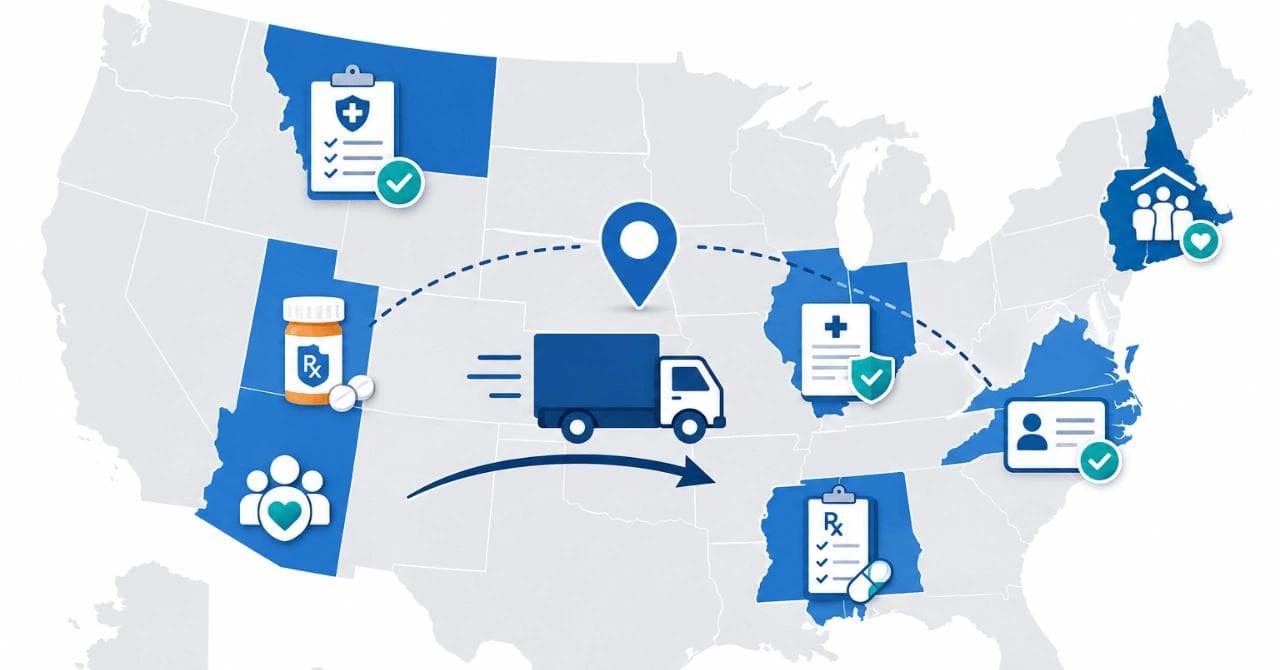
You cannot directly transfer a state-specific PAP or SPAP to another state. These programs are administered locally, so moving usually requires a new application and a fresh eligibility review. Before relocating, focus on these key steps:
- Check eligibility in your new state: Program availability, income limits, drug formularies, and coverage rules can vary significantly.
- Reapply if required: Most state-run programs, including ADAP, require proof of residency and updated eligibility documentation after a move.
- Contact the manufacturer: If your medication is provided through a manufacturer-sponsored patient support program, you may only need to update your address and healthcare provider information.
- Prevent medication gaps: Speak with your doctor and pharmacist before moving to arrange an adequate medication supply and identify a pharmacy in your new location.
- Use a healthcare moving checklist: Resources such as the ADAP Directory can help you locate pharmacies, healthcare providers, hospitals, and telehealth services in your new area.
If you are planning a PAP move in 2026, contact the program administrator before relocating to confirm which documents, prescriptions, or enrollment updates will be required.
What Happens to Copay Cards, Savings Programs, NovoCare, or LillyDirect When You Move?
Many copay cards and manufacturer savings programs can continue after you move to another state. However, you may need to update your address, pharmacy, insurance, or prescription information to remain eligible.
Programs such as NovoCare and LillyDirect have their own requirements, so check directly with the manufacturer after relocating. If you change healthcare providers, an updated prescription may also be required before benefits continue.
How Can You Avoid Prescription Coverage Gaps During a Move?
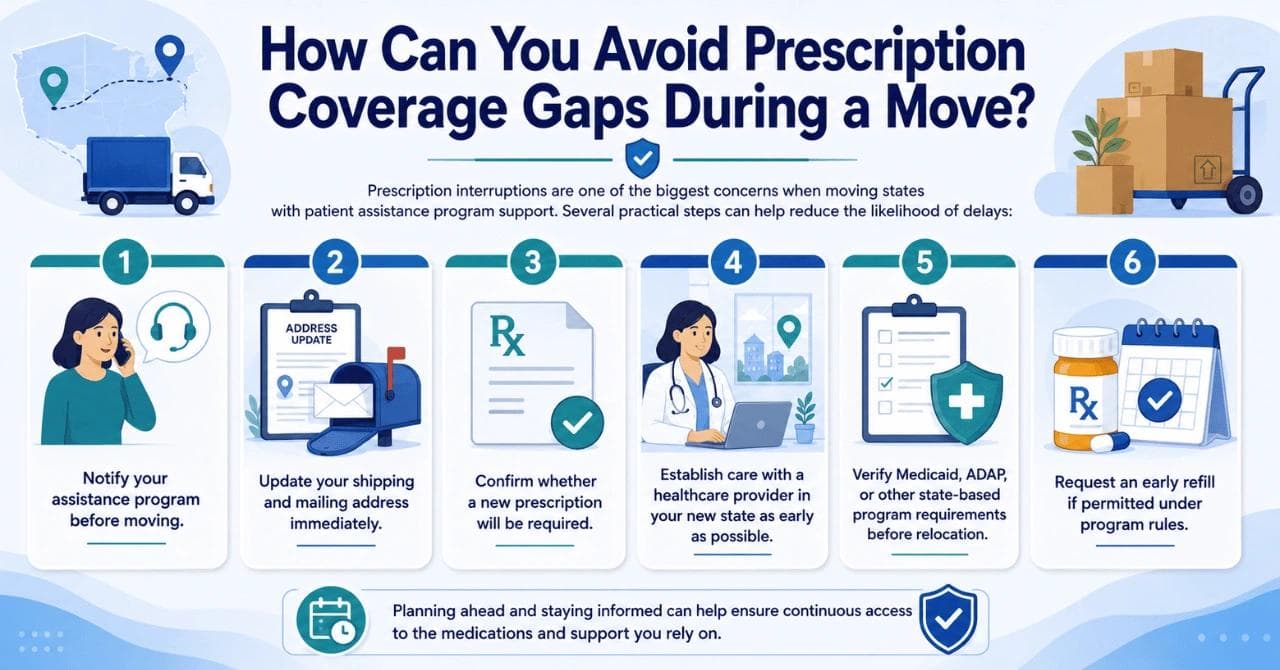
Prescription interruptions are one of the biggest concerns when moving states with patient assistance program support. Several practical steps can help reduce the likelihood of delays:
- Notify your assistance program before moving.
- Update your shipping and mailing address immediately.
- Confirm whether a new prescription will be required.
- Establish care with a healthcare provider in your new state as early as possible.
- Verify Medicaid, ADAP, or other state-based program requirements before relocation.
- Request an early refill if permitted under program rules.
Research published through the National Institutes of Health has shown that medication access barriers and coverage disruptions can negatively affect continuity of care. Taking proactive steps before relocation may help reduce avoidable interruptions in prescription access. Patients using a Patient Assistance Program in 2026 should ideally begin these preparations several weeks before moving rather than waiting until after arrival.
What Are Your Options If Your Patient Assistance Program Does Not Transfer?
If your current assistance arrangement cannot continue after your move, several legitimate alternatives may be available depending on your circumstances.
| Option | Description |
|---|---|
| Manufacturer Assistance Programs | Review whether the manufacturer offers a separate enrollment pathway in your new state. |
| Medicaid Reapplication | Apply for Medicaid coverage in your destination state if eligible. |
| ADAP or State Assistance Programs | Check state-specific enrollment requirements and formularies. |
| Charitable Patient Assistance Foundations | Some nonprofit organizations provide support for eligible patients. |
| Commercial Savings Programs | Certain manufacturer savings programs may remain available if eligibility requirements are met. |
| Licensed Pharmacy Services | Patients may compare medication access options through licensed pharmacies, including services such as Polar Bear Meds when appropriate. |
← Swipe to see more →
Because eligibility requirements vary, there is no single solution that works for every patient. Reviewing all available options before your move can help minimize disruptions.
Patient Assistance Program in 2026: Key Takeaways When Moving States
Moving to another state usually does not end your participation in a manufacturer-sponsored patient assistance program. However, updating your address, healthcare provider information, and coverage details is important to avoid medication delays. Before relocating, contact the program administrator and confirm any required documentation. Also, review state-specific eligibility or coverage rules to help ensure uninterrupted access to your treatment.
Frequently Asked Questions
Many patient assistance programs work across the United States, but requirements may vary. Before moving to another state, contact the program administrator to update your information. Confirm that your eligibility, prescription records, and medication access remain uninterrupted.
ADAP (AIDS Drug Assistance Program) benefits are administered by individual states. Assistance may still be available after your move. However, you may need to submit a new application and meet your new state's eligibility requirements. Contact the receiving state's ADAP office before relocating whenever possible.
Polar Bear Meds is a trusted pharmacy service that helps patients explore prescription access options for eligible medications. If your coverage changes after moving, review available medication options and consult your healthcare provider about the best solution for your needs.
Disclaimer
This article provides general informational content only and should not be considered medical, legal, insurance, financial, or eligibility advice. Patient assistance programs, Medicaid rules, manufacturer savings programs, NovoCare, LillyDirect, ADAP requirements, and other assistance resources may change without notice. Always verify current eligibility requirements directly with the program administrator. Consult your healthcare provider, insurer, pharmacist, or qualified advisor regarding your specific situation.