Side Effects of Trulicity: What You Need to Know
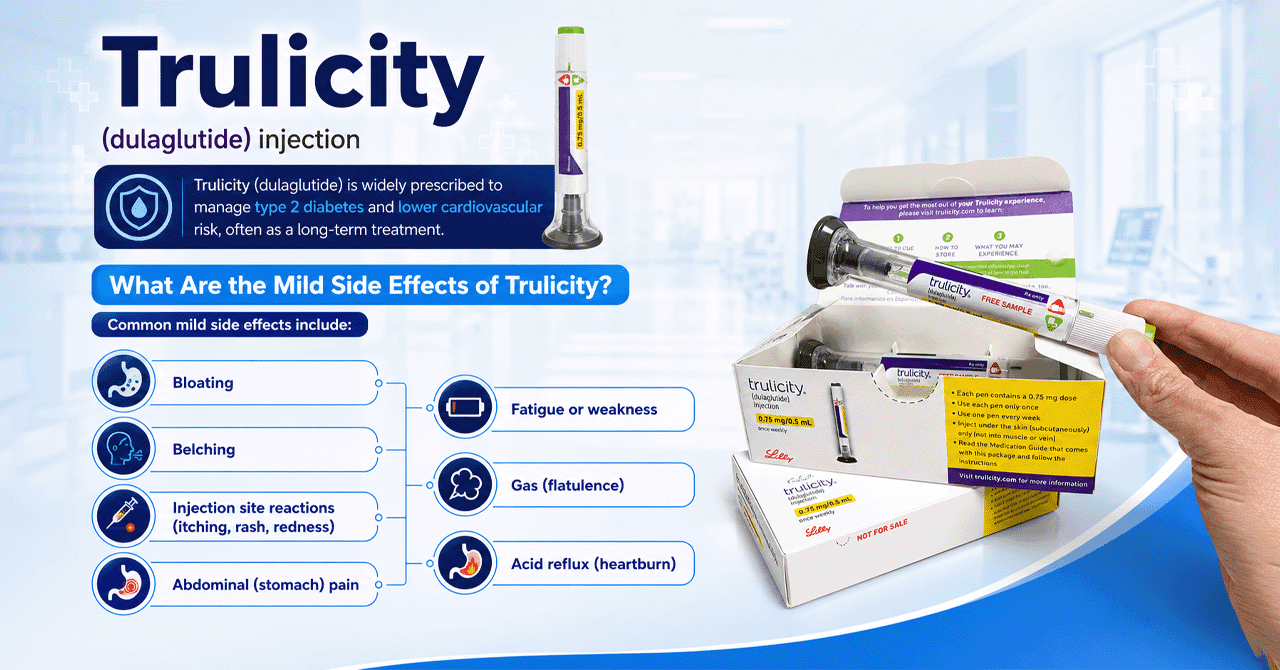
Trulicity (dulaglutide) is widely prescribed to manage type 2 diabetes and lower cardiovascular risk, often as a long-term treatment. It can cause a range of side effects, most commonly nausea, vomiting, diarrhea, and reduced appetite.
These are usually mild and tend to improve as your body adjusts, but some people may experience more serious risks that require medical attention. If side effects persist or become severe, it’s important to consult your healthcare provider rather than stopping the medication on your own.
What Are the Most Common Side Effects of Trulicity?
The most common side effects of Trulicity are mainly digestive and usually occur when you first start the medication. These effects are typically mild to moderate and often become easier to manage with continued use. Simple strategies like eating smaller meals and avoiding high-fat foods may help with Trulicity-related nausea.
Commonly reported side effects include:
- Nausea
- Vomiting
- Diarrhea
- Abdominal (stomach) pain
- Decreased appetite
These symptoms occur because Trulicity works by improving insulin secretion and slowing gastric emptying (how quickly food leaves your stomach), which helps regulate blood sugar levels but can also affect digestion. Managing Trulicity diarrhea may include staying hydrated and adjusting your diet as recommended by your doctor. In most cases, these side effects last for a few days to a few weeks and gradually decrease with continued use.
What Are the Mild Side Effects of Trulicity?
Mild side effects of Trulicity are fairly common, especially during the early stages of treatment. These side effects are generally manageable and may lessen over time with continued use.
Common mild side effects include:
- Bloating
- Belching
- Injection site reactions (itching, rash, redness)
- Abdominal (stomach) pain
- Fatigue or weakness
- Gas (flatulence)
- Acid reflux (heartburn)
In most cases, these side effects last for a few days to a few weeks. However, if they persist, worsen, or start affecting your daily routine, it’s important to consult your doctor for proper guidance.
What Are the Serious Side Effects of Trulicity?
Serious side effects of Trulicity are less common but can be potentially dangerous and require immediate medical attention. If you notice any severe, unusual, or life-threatening symptoms, contact your doctor right away. One of the most concerning risks includes Trulicity pancreatitis symptoms, which may present as severe abdominal pain and require urgent care.
Some serious side effects of Trulicity can be identified by specific warning symptoms, as shown below:
| Serious Side Effects of Trulicity | Possible Symptoms |
|---|---|
| Pancreatitis | Severe abdominal pain, nausea, vomiting, and fever |
| Hypoglycemia (low blood sugar) | Dizziness, shakiness, confusion, headache |
| Kidney problems | Reduced urination, swelling in legs, fatigue |
| Gallbladder issues | Upper abdominal pain, nausea, and fever |
| Thyroid tumors | Lump in neck, trouble swallowing, hoarseness |
| Severe allergic reaction | Swelling, rash, difficulty breathing |
← Swipe to see more →
In addition to these serious side effects, Trulicity also carries an important FDA boxed warning.
Trulicity Boxed Warning: Thyroid Cancer Risk
Trulicity carries a boxed warning related to Trulicity and thyroid cancer risk, the most serious warning issued by the U.S. Food and Drug Administration (FDA). This includes a potential risk of a rare type of cancer called medullary thyroid carcinoma (MTC).
Because of this warning, Trulicity should not be used by people who:
- Have an individual or family history of medullary thyroid carcinoma (MTC)
- Have multiple endocrine neoplasia syndrome type 2 (MEN 2), a rare genetic condition
It’s important to watch for symptoms that may indicate thyroid problems, such as:
- A lump or swelling in the neck
- Hoarseness or voice changes
- Trouble swallowing
- Shortness of breath
If you notice any of these symptoms, contact your doctor immediately. Before starting Trulicity, always discuss your medical and family history with your healthcare provider to ensure it is safe for you.

How Long Do Trulicity Side Effects Last?
The duration of Trulicity side effects varies, but most are temporary and improve as your body adjusts to the medication. Common digestive symptoms like nausea, vomiting, and diarrhea usually appear in the first few weeks and gradually ease over time.
In general:
- First few days to weeks: Mild side effects are most noticeable
- After a few weeks: Symptoms often reduce or become manageable
- Longer duration: Some people may experience effects if the dose increases
If side effects persist for more than a few weeks or interfere with daily life, consult your healthcare provider.
Trulicity Injection Site Reactions and Side Effects
Trulicity is given as a subcutaneous injection, so some people may experience mild reactions at the injection site. These reactions are typically mild and resolve on their own.
Common injection site side effects include:
- Itching
- Redness
- Swelling
- Discomfort or mild pain
These reactions typically go away on their own within a few days. To reduce the risk, it’s recommended to rotate injection sites (such as the abdomen, thigh, or upper arm) and avoid injecting into the same spot repeatedly. If you notice severe pain, persistent swelling, or signs of infection, consult your doctor promptly.
Final Thoughts on Trulicity Side Effects
Trulicity side effects are usually mild and temporary, especially during the early stages of treatment. Common symptoms like nausea and digestive discomfort often improve as your body adjusts, but it’s important to stay aware of serious risks such as pancreatitis or thyroid-related concerns.
By understanding how Trulicity side effects present and how long they may last, you can manage symptoms more effectively and seek timely medical care when needed. Always follow your doctor’s advice and never stop or adjust your medication without professional guidance.
Frequently Asked Questions
Serious side effects of Trulicity can include pancreatitis, kidney problems, severe low blood sugar (hypoglycemia), and thyroid tumor risk. These require immediate medical attention if symptoms appear.
Trulicity is not recommended for people with a family history of medullary thyroid carcinoma (MTC) or those with multiple endocrine neoplasia syndrome type 2 (MEN 2). Always consult your doctor before use.
Trulicity slows down stomach emptying to help control blood sugar, which can lead to nausea, vomiting, or digestive discomfort, especially when starting treatment or increasing the dose.
Medical Disclaimer
This content is for informational purposes only and does not constitute medical advice. Trulicity (dulaglutide) use and side effects may vary depending on individual health conditions and treatment plans. Always consult a licensed healthcare provider before starting, stopping, or changing your medication. Do not adjust your dosage or discontinue Trulicity without professional medical guidance.