What Are the Main Side Effects of Taking Mounjaro? A Comprehensive Guide
Mounjaro (tirzepatide) is a widely prescribed medication that has quickly gained popularity as an effective treatment for type 2 diabetes and weight management. However, like any prescription medication, it can cause side effects that vary from mild digestive discomfort to rare but serious health concerns.
Knowing what side effects to expect can make starting Mounjaro less stressful when symptoms are normal, and when to consider seeking medical help. This comprehensive guide explains common, mild, and serious Mounjaro side effects, how long they may last, and practical ways to manage them safely.

What Are the Mild Side Effects of Mounjaro?
These symptoms usually occur during the first few weeks of the treatment. The following table summarizes the most commonly reported Mounjaro stomach issues and other mild reactions.
| Mild Side Effects | Why It Happens | Typical Duration |
|---|---|---|
| Nausea | Slower stomach emptying affects digestion | First 1-4 weeks |
| Diarrhea | Changes in gut motility | A few days to weeks |
| Constipation | Slower digestive movement | Intermittent |
| Vomiting | Stomach irritation from delayed emptying | Usually temporary |
| Loss of appetite | Hormonal appetite suppression | Ongoing but manageable |
| Stomach discomfort | Digestive slowdown | Improves with time |
| Injection-site redness | Skin sensitivity | 1-3 days |
| Fatigue | Metabolic adjustment | Temporary |
← Swipe to see more →
Patients who are using Mounjaro for weight management may notice slightly stronger appetite-related symptoms due to reduced calorie intake.
What Are the Serious Side Effects of Mounjaro?
Although rare, serious side effects of Mounjaro can require immediate medical attention. According to the FDA prescribing information for Mounjaro, it is important to understand the following risks to medication safety.
| Serious Side Effect | Warning Signs | Emergency Level |
|---|---|---|
| Pancreatitis | Severe abdominal pain, vomiting, and fever | Emergency |
| Gallbladder disease | Upper right abdominal pain, jaundice | Urgent |
| Severe allergic reaction | Swelling, rash, breathing difficulty | Emergency |
| Kidney problems | Reduced urination, swelling | Urgent |
| Severe hypoglycemia (with insulin or sulfonylureas) | Confusion, shaking, sweating | Emergency |
| Vision changes | Blurred or worsening eyesight | Urgent |
← Swipe to see more →
Symptoms of pancreatitis include:
- Severe abdominal pain that reaches to the back
- Fever
- Persistent vomiting
- Rapid heart rate
If these symptoms occur, stop using Mounjaro and seek immediate medical attention.
What Are the Mounjaro Long-Term Side Effects?
The clinical studies on Mounjaro show that most Mounjaro long-term side effects are still being studied because tirzepatide is a relatively new medication.
Possible long-term risks include:
- Persistent gastrointestinal symptoms
- Gallbladder complications
- Nutritional deficiencies from reduced appetite
- Rare pancreatic complications
- Potential thyroid risks (discussed in the boxed warning section)
Patients using Mounjaro for long-term diabetes or weight management should attend regular follow-up visits to monitor:
- Blood sugar levels
- Kidney function
- Pancreatic health
- Nutritional status
How Long Do Mounjaro Side Effects Last?
The duration of side effects of Mounjaro varies depending on the starting dose, the individual, and how quickly the dose is increased. Most mild digestive symptoms improve as the body adjusts to the medication.
For many patients, side effects begin shortly after starting treatment or increasing the dose, such as when moving from 2.5 mg to 7.5 mg. These symptoms are usually temporary and decrease over time.
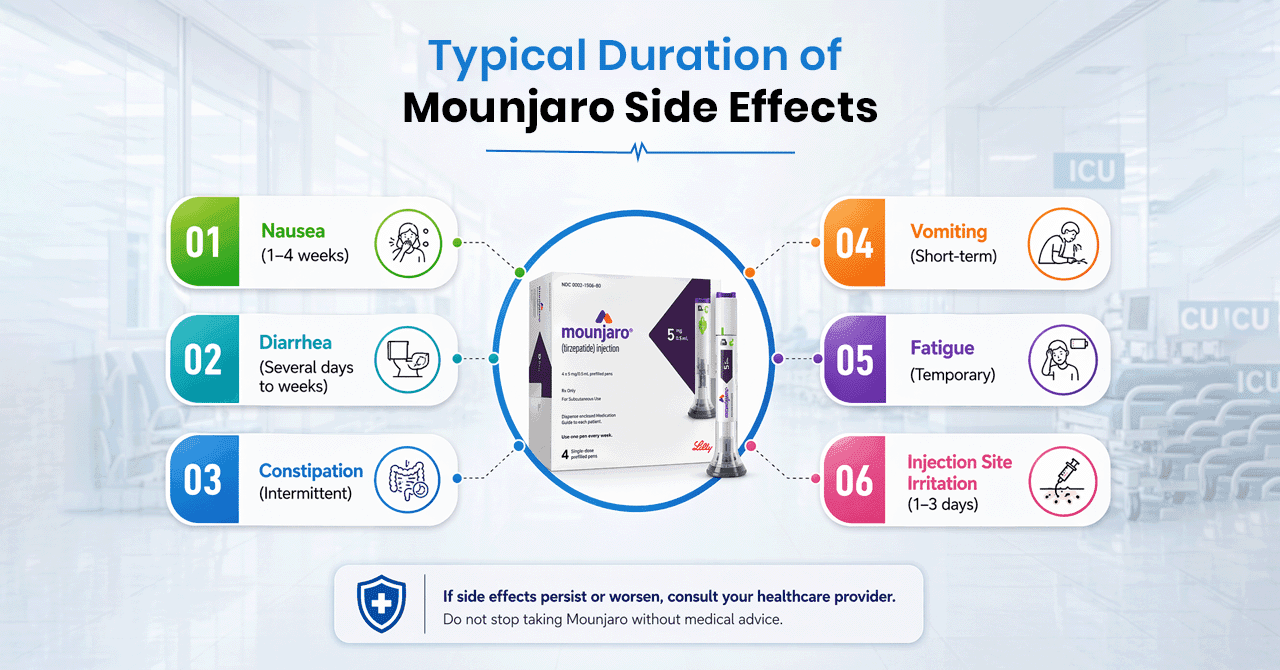
Typical Duration of Mounjaro Side Effects
| Mounjaro Side Effect | How Long It May Last |
|---|---|
| Nausea | 1-4 weeks |
| Diarrhea | Several days to weeks |
| Constipation | Intermittent |
| Vomiting | Usually short-term |
| Fatigue | Temporary |
| Injection site irritation | 1-3 days |
← Swipe to see more →
The Mounjaro Boxed Warning: What You Need to Know
| Mounjaro carries an FDA boxed warning because of a potential risk of thyroid C-cell tumors. In animal studies, tirzepatide and other similar medications caused thyroid C-cell tumors in rats. It is not known whether this risk applies to humans, including the risk of medullary thyroid carcinoma (MTC). Patients should inform their healthcare provider quickly if they notice symptoms such as a lump or swelling in the neck, difficulty swallowing, shortness of breath, or hoarseness, as these may indicate thyroid cancer. |
|---|
← Swipe to see more →
What Are the Tips to Manage Mounjaro Side Effects?
Many Mounjaro side effects for diabetes management and weight loss can be managed with simple lifestyle adjustments and careful dosing. Below are strategies to help reduce discomfort while allowing the medication to work effectively.
Managing Mounjaro Nausea and Digestive Symptoms
- Eat smaller, more frequent meals
- Choose easy-to-digest foods
- Stay hydrated
- Properly follow the recommended dosing schedule
- Rotate injection sites
The Final Thoughts on Common, Mild, and Serious Mounjaro Side Effects
For many people, side effects are mild, especially digestive symptoms like diarrhea, nausea, and reduced appetite, and they often improve as the body adjusts to treatment. Although serious complications are rare, recognizing warning signs such as severe abdominal pain or allergic reactions is important for safe use. Regular monitoring, gradual dose increases, and open communication with a healthcare provider can help reduce risks and improve treatment outcomes while using Mounjaro for diabetes or weight management.
Frequently Asked Questions
The side effects of Mounjaro 2.5 mg are typically mild and may include diarrhea, constipation, nausea, and decreased appetite. This starting dose is designed to help the body adjust, so symptoms often improve within the first few weeks.
Both Mounjaro and Ozempic commonly cause digestive symptoms, such as diarrhea and nausea. Some studies suggest Mounjaro may cause slightly more gastrointestinal side effects, especially during early dose adjustments.
Mounjaro hair loss is a side effect that is not common but may occur during rapid weight loss. Hair thinning is often temporary and usually related to nutritional changes rather than a direct medication effect.
Medical Disclaimer
The above content is for informational purposes only and does not replace professional medical advice. Always consult a licensed healthcare provider before starting or combining medications.