What Are the Most Common Heartburn Medications?
Heartburn is a common digestive issue caused by stomach acid flowing back into the esophagus, leading to a burning sensation in the chest. To relieve this discomfort, heartburn medications work by either neutralizing stomach acid or reducing its production, helping control symptoms like acid reflux and indigestion.
There are many different types of heartburn medications available, some over-the-counter and some prescription-based. If you’re wondering what is the best heartburn medication, the answer depends on the frequency and severity of your symptoms. Below are the three most common forms recommended by doctors: antacids, H2 blockers, and proton pump inhibitors.
1. Antacids: The Fastest Heartburn Medication for Immediate Relief
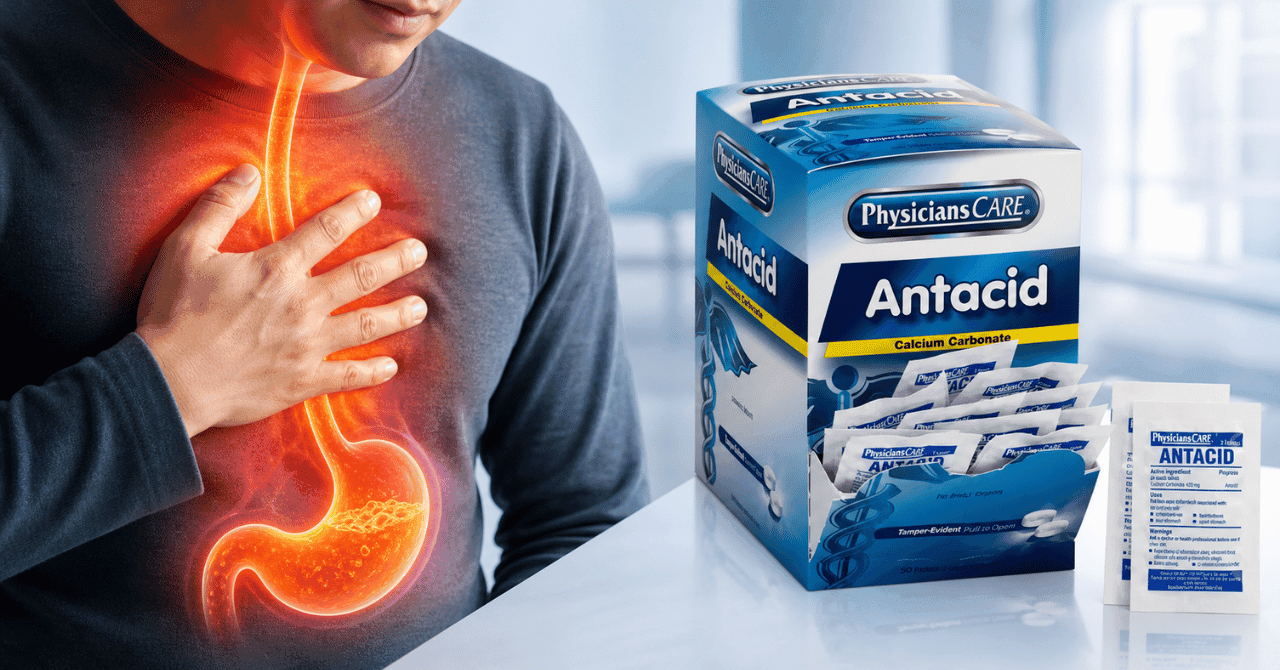
When you need quick relief, antacids are often the first choice. They act as “rescue” heartburn medications, helping ease symptoms almost immediately after they start.
How Antacids Work
Antacids don’t prevent acid production; instead, they neutralize existing stomach acid. FDA-recognized active ingredients like calcium carbonate, magnesium hydroxide, aluminum hydroxide, and sodium bicarbonate help neutralize stomach acid. This raises the stomach’s pH level and reduces the burning sensation in the chest.
When to Use Antacids for Heartburn Relief
- Fast relief: Works within 5-15 minutes
- Occasional symptoms: After heavy, spicy, or acidic meals
- Short duration: Relief typically lasts 30-60 minutes
Common FDA-Approved Antacid Medications (OTC Options)
Widely used over-the-counter options include:
- Calcium carbonate: Tums, Rolaids
- Magnesium hydroxide: Milk of Magnesia
- Aluminum hydroxide + magnesium combinations: Maalox, Mylanta
- Sodium bicarbonate: Alka-Seltzer
These are available in chewable tablets, liquids, and effervescent forms for faster absorption.
2. H2 Blockers: Best Heartburn Medication for All-Day Acid Control
If antacids don’t last long enough, H2 blockers are a stronger option for extended relief. These heartburn medications reduce how much acid your stomach produces, helping control symptoms for several hours.
How H2 Blockers Reduce Acid Production in the Stomach
H2 blockers work by blocking histamine signals in the stomach lining that trigger acid release. With less acid produced, there’s a lower chance of irritation or acid reflux. H2 blockers don’t provide instant relief. They typically take 1 to 3 hours to start working but offer much longer-lasting control than antacids.
When to Use H2 Blockers for Longer-Lasting Heartburn Relief
- All-day control: Relief lasts around 8-12 hours
- Preventive use: Take 30-60 minutes before trigger foods
- Nighttime relief: Helpful for heartburn while lying down
Common FDA-Approved H2 Blocker Medications (OTC Options)
- Famotidine (Pepcid AC)
- Cimetidine (Tagamet HB)
These are available over the counter and are commonly recommended for moderate, recurring symptoms.
3. Proton Pump Inhibitors (PPIs): Heartburn Medication for Chronic GERD
PPIs are used when heartburn happens regularly and starts affecting daily life. They are recommended for symptoms such as burning chest pain, frequent acid reflux, difficulty swallowing, or throat irritation, especially when these occur multiple times a week. They are also used to treat gastroesophageal reflux disease (GERD), a long-term condition where stomach acid repeatedly flows back into the esophagus.
How PPIs Block Acid Production
PPIs work by blocking the acid-producing pumps in the stomach lining. This significantly reduces overall acid levels, helping prevent reflux and allowing the esophagus to heal from ongoing irritation. PPIs are not for immediate relief. Some improvement may be noticed within 24 hours, but it usually takes 1 to 4 days of consistent use for the full effect.
When to Use PPIs for Severe or Frequent Heartburn
- Frequent symptoms: Occurring 2 or more days per week
- GERD treatment: Helps manage chronic acid reflux and esophageal damage
- 24-hour relief: Provides the longest-lasting acid suppression
Common FDA-Approved PPI Medications (OTC & Prescription)
- Omeprazole (Prilosec OTC)
- Esomeprazole (Nexium 24HR)
- Lansoprazole (Prevacid 24HR)
These are usually taken once daily, 30-60 minutes before breakfast.
Prescription vs. OTC Heartburn Medications: Which One Do You Need?
The choice between OTC and prescription heartburn medications depends on how often your symptoms occur and how well they respond to initial treatment. While the ingredients may be similar, the strength, duration, and medical supervision are different.
| Feature | OTC Heartburn Medications | Prescription Heartburn Medications |
|---|---|---|
| Best For | Occasional heartburn (less than 2 times/week) | Frequent or chronic symptoms (2 or more times/week) |
| Symptom Severity | Mild, trigger-based (food, lifestyle) | Persistent, severe, or worsening symptoms |
| Response to Treatment | Works well with short-term use | Needed when OTC options don’t help |
| Dosage | Lower, standard doses | Higher, customized doses |
| Duration | Short-term use (typically up to 14 days for PPIs) | Long-term use under medical supervision |
| Medical Need | No diagnosis required | Often used for GERD (Gastroesophageal Reflux Disease) |
| Warning Signs | Not typically present | May include swallowing issues, weight loss, chronic cough, chest pain |
| Access | Available over the counter | Requires a doctor's consultation |
← Swipe to see more →
For occasional triggers, OTC options are usually enough. If you need heartburn medication regularly for more than two weeks, or your symptoms interfere with daily life, consult a healthcare professional.
Long-Term Safety and Side Effects of Common Heartburn Medications
While these treatments are effective, using any heartburn medication for an extended period requires caution. Stomach acid is essential for digestion, nutrient absorption, and protecting against harmful bacteria, so long-term suppression can lead to potential health risks.
Common Heartburn Medications Side Effects
- Antacids may cause diarrhea (magnesium) or constipation (calcium or aluminum) with frequent use.
- H2 blockers can sometimes lead to headache, dizziness, or fatigue.
- PPIs (proton pump inhibitors) may cause nausea, bloating, or stomach discomfort.
Long-Term Risks of Acid-Suppressing Medications
Most long-term concerns are linked to PPIs and prolonged acid suppression:
- Nutrient deficiencies: Lower acid levels can reduce absorption of vitamin B12, magnesium, calcium, and iron.
- Bone health: Linked to a higher risk of fractures with prolonged use.
- Infections: Increased risk of infections like C. difficile.
- Kidney health: Associated with chronic kidney disease in some studies.
- Rebound acid: Stopping PPIs suddenly can cause a temporary increase in acid.
Some studies have explored links to dementia and heart-related conditions, but findings are not conclusive.
Conclusion: What Is the Best Heartburn Medication for You?
The most common heartburn medications, antacids, H2 blockers, and PPIs each serve a specific purpose based on how often and how severely your symptoms occur. Antacids provide quick relief for occasional discomfort, H2 blockers offer longer-lasting control, and PPIs are used for frequent or chronic heartburn, including GERD.
The best heartburn medication for you depends on matching the treatment to your symptom pattern rather than choosing the strongest option. If symptoms persist for more than two weeks, worsen, or require regular medication, consult a healthcare professional for proper evaluation and long-term management.
Frequently Asked Questions
The most effective option depends on the frequency of symptoms. Proton pump inhibitors (PPIs) are considered the most effective for frequent or chronic heartburn, while H2 blockers and antacids are better suited for mild or occasional symptoms.
For fast relief, antacids are the best choice. They work within minutes by neutralizing existing stomach acid and are useful for sudden or occasional heartburn.
There is no single permanent cure for everyone. Long-term control usually involves a combination of lifestyle changes (diet, weight management, avoiding triggers) and medication when needed. Persistent symptoms may require medical evaluation to identify underlying causes like GERD.
Taking over-the-counter heartburn medication daily for a short period is generally safe. However, long-term use without medical guidance can mask underlying conditions. Daily use of PPIs should be supervised by a doctor to reduce risks such as nutrient deficiencies or bone-related issues.
Medical Disclaimer
This content is for informational purposes only and does not replace medical advice. Heartburn medications can affect individuals differently. Always consult a healthcare professional before stopping, starting, or changing any treatment, especially if symptoms are persistent or related to GERD.