What Are the Negative Side Effects of Cialis?
Cialis (tadalafil) is a prescription medication used to treat erectile dysfunction (ED) and symptoms of benign prostatic hyperplasia (BPH). It belongs to a class of drugs called phosphodiesterase type 5 (PDE5) inhibitors, which improve blood flow to specific areas of the body.
While Cialis is generally well-tolerated, it can cause side effects that vary depending on dosage, health condition, and other medications. Understanding these negative side effects can help you recognize warning signs and seek medical advice when needed.
What Are the Most Common Negative Side Effects of Cialis?
The most common negative side effects of Cialis are usually mild and temporary. They often resolve within a few hours to a few days as the medication leaves the body.
Common negative side effects of Cialis include:
- Back pain
- Dizziness
- Headache (one of the most frequently reported side effects)
- Muscle aches
- Nasal congestion (stuffy nose)
- Pain in the arms or legs
- Flushing (warmth or redness of the face, neck, or chest)
- Indigestion or upset stomach
- Upper respiratory symptoms, such as cold-like symptoms

What Are the Serious Negative Side Effects of Cialis?
Some side effects of Cialis are rare but serious and require immediate medical attention. As outlined in the FDA prescribing information, these are rare side effects of Cialis. Recognizing these symptoms early can help prevent complications.
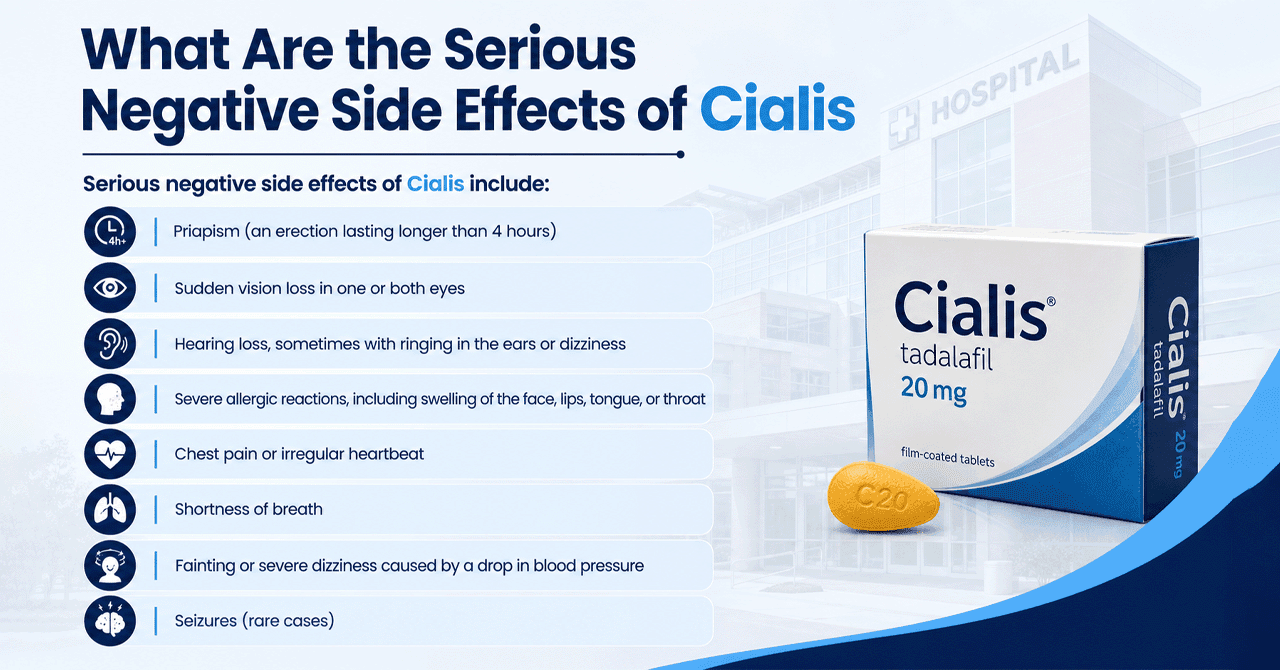
Serious negative side effects of Cialis include:
- Priapism (an erection lasting longer than 4 hours)
- Sudden vision loss in one or both eyes
- Hearing loss, sometimes with ringing in the ears or dizziness
- Severe allergic reactions, including swelling of the face, lips, tongue, or throat
- Chest pain or irregular heartbeat
- Shortness of breath
- Fainting or severe dizziness caused by a drop in blood pressure
- Seizures (rare cases)
What Are the Long-Term Negative Side Effects of Cialis?
While many side effects are short-lived, some may persist or develop with long-term use, especially in individuals with underlying health conditions.
Possible long-term negative side effects of Cialis include:
- Persistent back pain or muscle aches with repeated use
- Ongoing indigestion or stomach discomfort in some users
- Tadalafil vision changes, including rare cases of sudden vision loss linked to Non-arteritic anterior ischemic optic neuropathy
- Hearing changes, such as gradual or sudden hearing loss, in rare cases
- Low blood pressure episodes, particularly in people taking interacting medications
- The Cialis heart attack risk may be higher in individuals with underlying cardiovascular conditions, particularly when combined with certain medications or pre-existing heart disease
Understanding these risks can help guide safer long-term use.
How to Reduce or Manage Negative Side Effects of Cialis?
Most side effects are mild and manageable. Proper use, lifestyle adjustments, and avoiding interactions can significantly reduce discomfort. Special caution is needed when combining Cialis and blood pressure medication, as this can increase the risk of low blood pressure.
The following strategies can help minimize discomfort and improve tolerance:
| Take Action | Why It Helps |
|---|---|
| Take Cialis as prescribed | Reduces risk of overdose-related side effects |
| Avoid excessive alcohol | Prevents dizziness and low blood pressure |
| Stay hydrated | Helps reduce headache risk |
| Avoid medication interactions | Prevents dangerous drug reactions |
| Report persistent symptoms | Allows dose adjustment if needed |
← Swipe to see more →
The Final Words on the Negative Side Effects of Cialis
Side effects of Cialis are usually mild and temporary, but they can vary depending on dosage, health conditions, and other medications. While common effects like headache or flushing are typically not serious, rare reactions such as vision loss, hearing changes, or prolonged erections require immediate medical attention. Taking Cialis as prescribed and staying aware of warning signs can help reduce risks. If symptoms persist or worsen, consult a healthcare professional.
Frequently Asked Questions
Most mild side effects last a few hours to a couple of days and typically improve as the medication leaves the body. Duration may vary depending on age, dose, and overall health.
You can reduce the risk of Cialis side effects by taking it exactly as prescribed, avoiding excessive alcohol, and informing your doctor about any other medications you are using. Staying hydrated and using the lowest effective dose also helps minimize unwanted effects.
Cialis may not be suitable for individuals taking nitrates, certain blood pressure medications, or those with severe heart conditions. Combining Cialis with nitrates or certain blood pressure medications can cause a dangerous drop in blood pressure and should be avoided unless advised by a doctor.
Yes, drinking alcohol while taking Cialis can increase the likelihood of side effects such as headache, dizziness, low blood pressure, and flushing. Limiting alcohol intake can help reduce these risks.
Daily low-dose Cialis is approved for some patients, but it should only be used under medical supervision. A doctor determines safety based on your health condition, dosage, and response to the medication.
Both medications belong to the same class (PDE5 inhibitors) and share similar side effects such as headache, flushing, and indigestion. However, Cialis may cause more muscle aches and back pain, while Viagra is more commonly associated with visual disturbances.
Medical Disclaimer
This blog is provided for informational purposes only and does not replace professional medical advice, diagnosis, or treatment. Information is based on trusted sources, including peer-reviewed studies and recognized medical organizations. Always consult an authorized healthcare professional before making treatment decisions.