What Are the Worst Entresto Side Effects? A Complete Guide
Entresto is a widely prescribed heart failure medication that improves heart function. The worst side effects of Entresto include life-threatening angioedema (severe swelling), dangerously low blood pressure, kidney damage, and high potassium levels that can affect heart rhythm. While these risks are rare, understanding them is essential for safe use.
What Are the Worst Side Effects of Entresto?
The most serious side effects of Entresto are uncommon but can be life-threatening if not treated quickly. These reactions usually affect breathing, blood pressure, kidney function, or potassium balance. Recognizing symptoms early can help prevent severe complications.
Angioedema (Severe Swelling)
Angioedema is a rare but serious reaction that causes sudden swelling beneath the skin. It most often affects the face, lips, tongue, or throat and may interfere with breathing.
Symptoms may include:
- Swelling of the face, lips, tongue, or throat
- Trouble breathing or swallowing
- Tightness in the throat
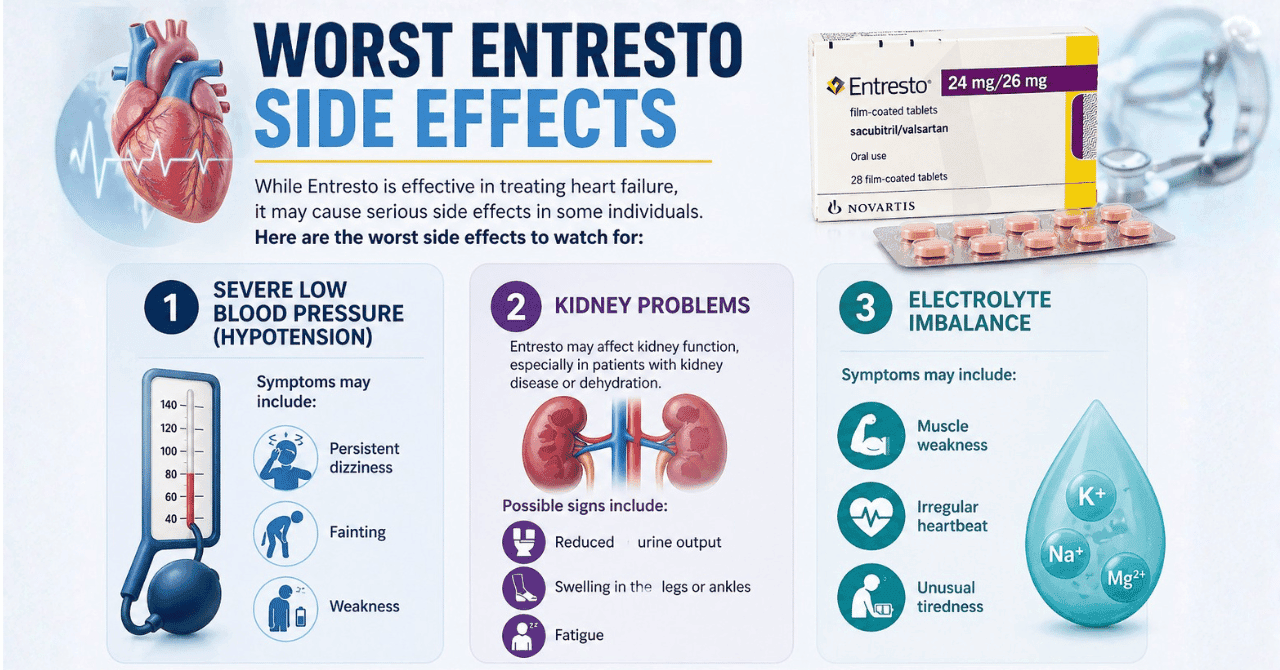
Severe Low Blood Pressure (Hypotension)
Severely low blood pressure may occur when blood vessels relax too much. This can reduce blood flow to the brain and other organs.
Symptoms may include:
- Persistent dizziness
- Fainting
- Weakness
Kidney Problems
Entresto may affect kidney function, especially in patients with kidney disease or dehydration.
Possible signs include:
- Reduced urine output
- Swelling in the legs or ankles
- Fatigue
High Potassium Levels (Hyperkalemia)
High potassium levels may occur because the medication affects how the kidneys regulate electrolytes.
Symptoms may include:
- Muscle weakness
- Irregular heartbeat
- Unusual tiredness
Common Side Effects of Entresto vs. Worst Side Effects
Common side effects of Entresto are usually mild and manageable, while the worst side effects are rare but require immediate medical attention.
| Common Side Effects | Worst Side Effects |
|---|---|
| Lightheadedness or dizziness | Angioedema (severe swelling of face, lips, throat) |
| Weakness or fatigue | Severe hypotension (dangerously low blood pressure) |
| Dry cough (some patients may require supportive care or Entresto cough relief strategies) | Kidney damage or worsening kidney function |
| Nausea | Hyperkalemia (high potassium levels affecting heart rhythm) |
| Mild drop in blood pressure | Fainting or risk of shock due to low BP |
← Swipe to see more →
Mild vs. Severe Entresto Side Effects
Mild side effects may include:
- Dizziness
- Fatigue
- Dry cough
- Mild drop in blood pressure
Severe side effects may include:
- Angioedema
- Severe hypotension
- Kidney problems
- Hyperkalemia
Does Entresto Have an FDA Boxed Warning?
Yes, Entresto carries an FDA boxed warning for fetal toxicity, which is the most serious type of safety warning issued for medications. This warning states that taking Entresto during pregnancy can cause serious injury or death to a developing fetus.
The risk is highest during the second and third trimesters, when the medication may affect fetal kidney development and reduce amniotic fluid levels. If pregnancy is detected while taking Entresto, the medication should be stopped immediately, and a healthcare provider should be contacted to discuss safer treatment options.
Who Is at Higher Risk & How to Reduce Entresto Side Effects?
Certain individuals may be at higher risk of serious side effects when taking Entresto. Identifying these risk factors can help healthcare providers monitor patients more closely and adjust treatment when necessary.
People who may be at higher risk include:
- Individuals with a history of angioedema, especially after taking ACE inhibitors or similar medications.
- Patients with kidney disease, as reduced kidney function can increase the risk of worsening kidney problems and high potassium levels.
- Older adults, who may be more sensitive to blood pressure changes and dehydration.
- People taking diuretics ("water pills"), which may increase the chance of low blood pressure or dizziness.
- Patients using potassium supplements or potassium-sparing medications, which can raise the risk of hyperkalemia.
- Black patients, who may have a slightly higher risk of angioedema compared to other populations.
Healthcare providers may recommend closer monitoring for higher-risk patients.
Ways to reduce risk:
- Monitor blood pressure
- Renal function monitoring
- Avoid potassium supplements
- Stay hydrated
- Managing Entresto dizziness (stand slowly)
- Inform the doctor about medications
Why Does Entresto Cause Side Effects?
Entresto contains sacubitril/valsartan, a heart failure medication that works by blocking the renin-angiotensin-aldosterone system (RAAS) and inhibiting neprilysin. These actions relax blood vessels, remove excess fluid, and reduce strain on the heart.
Because these mechanisms affect blood pressure, kidney function, and potassium balance, side effects such as hypotension, hyperkalemia, or changes in renal function may occur in some patients.

Emergency Warning Signs: When to Stop Entresto Immediately
Stop Entresto and seek emergency care if you experience:
- Sudden swelling of the face, lips, tongue, or throat that affects breathing
- Severe dizziness or fainting
- Trouble breathing or swallowing
- Irregular heartbeat or muscle weakness
Patients should never attempt how to stop Entresto side effects without medical supervision.
Conclusion: Is Entresto Safe Long-Term Despite Its Worst Side Effects?
Most Entresto side effects are manageable with proper monitoring. Although serious reactions such as angioedema or severe blood pressure changes can occur, they are uncommon when the medication is used under medical supervision.
Clinical studies show that long-term treatment with sacubitril/valsartan may improve heart function and reduce hospitalization or mortality risk in many patients with heart failure. Patients should always discuss concerns with their healthcare provider to ensure that Entresto remains an effective and safe part of their treatment plan.
Frequently Asked Questions
The most serious side effect of Entresto is angioedema, a rare but potentially life-threatening reaction that causes sudden swelling of the face, lips, tongue, or throat. This condition can block breathing and requires immediate emergency care.
Most mild side effects of Entresto, such as dizziness or fatigue, often improve within the first few days or weeks as the body adjusts to the medication.
Entresto and kidney function are closely connected, as the medication can affect how the kidneys filter blood in some patients. Healthcare providers usually monitor kidney function through routine blood tests to detect any changes early.
Medical Disclaimer
This blog is provided for informational purposes only and does not replace expert medical guidance, diagnosis, or treatment. The information is based on trusted sources such as the FDA and National Library of Medicine, but individual responses may vary. Always consult an authorized healthcare professional before making treatment decisions.