What Is Brilinta Used For?
Brilinta is a potent antiplatelet medication prescribed for patients with a history of heart disease or acute coronary syndrome. In simple terms, what is Brilinta used for? It is used to prevent blood clots that can lead to heart attacks and strokes, especially after a recent heart attack or stent placement. It works by stopping platelets from sticking together, helping maintain smooth blood flow, and lowering future cardiovascular risks.
How Brilinta Works to Prevent Blood Clots
Brilinta (ticagrelor) is a potent antiplatelet medication, specifically a P2Y12 receptor antagonist, used to reduce the risk of blood clots in patients with heart disease. Unlike anticoagulants such as warfarin that act on clotting proteins, Brilinta works directly on platelets, the cells responsible for clot formation.
It blocks the P2Y12 receptor, preventing ADP from activating platelets and making them sticky. This reduces clot formation after plaque rupture in narrowed arteries, lowering the risk of heart attack and stroke.
A key advantage of Brilinta is that it is direct-acting and reversible. It works quickly without liver activation, and platelet function recovers faster after stopping compared to some older antiplatelet drugs, which is useful in surgical situations.

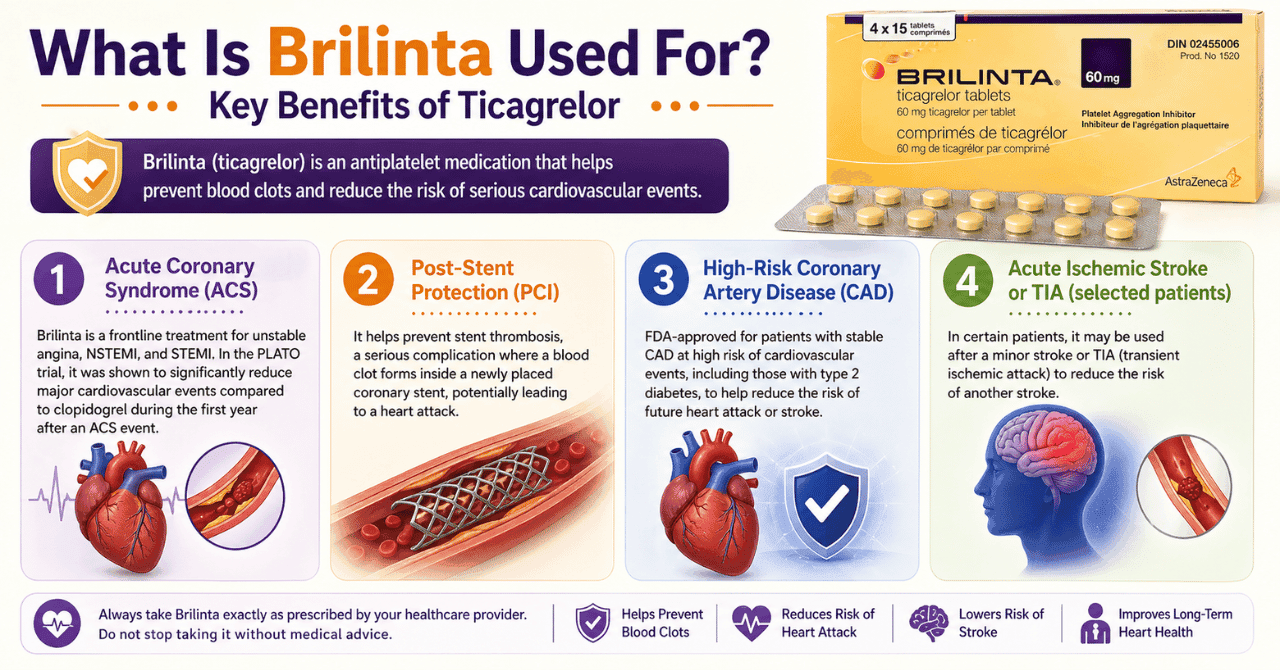
What Is Brilinta Used For? Key Benefits of Ticagrelor
Doctors prescribe Brilinta (ticagrelor) to reduce the risk of serious cardiovascular events like heart attack, stroke, and cardiovascular death in high-risk patients. Its rapid onset and consistent platelet inhibition make it widely used in acute and long-term heart care.
- Acute Coronary Syndrome (ACS): Brilinta is a frontline treatment for unstable angina, NSTEMI, and STEMI. In the PLATO trial, it was shown to significantly reduce major cardiovascular events compared to clopidogrel during the first year after an ACS event.
- Post-Stent Protection (PCI): It helps prevent stent thrombosis, a serious complication where a blood clot forms inside a newly placed coronary stent, potentially leading to a heart attack.
- High-Risk Coronary Artery Disease (CAD): FDA-approved for patients with stable CAD at high risk of cardiovascular events, including those with type 2 diabetes, to help reduce the risk of future heart attack or stroke.
- Acute Ischemic Stroke or TIA (selected patients): In certain patients, it may be used after a minor stroke or TIA (transient ischemic attack) to reduce the risk of another stroke.
Important FDA Note: Brilinta must be taken with low-dose aspirin (75-100 mg daily). Higher doses of aspirin may reduce its effectiveness and are not recommended during therapy.
Brilinta vs. Plavix for Preventing Heart Events
Brilinta (Ticagrelor) and Plavix (Clopidogrel) are both antiplatelet drugs used to prevent heart attacks and strokes, but they differ in strength, speed, and suitability for different patient groups.
| Factor | Brilinta (Ticagrelor) | Plavix (Clopidogrel) |
|---|---|---|
| Dosing | Twice daily | Once daily |
| Activation | Works directly (no liver activation needed) | Requires liver activation |
| Onset of action | Faster action | Slower onset |
| Effectiveness | Stronger platelet inhibition | Moderate but well-established |
| Bleeding risk | Higher risk | Lower risk |
| Common side effects | Shortness of breath, bleeding | Bruising, nosebleeds |
← Swipe to see more →
In clinical practice, Brilinta is often preferred in the early, high-risk phase after a heart attack or acute coronary event because it works faster and provides stronger platelet inhibition. Plavix is more commonly used for long-term prevention of heart attacks and strokes due to its lower bleeding risk and better long-term tolerance.
Brilinta Safety, Warnings, and Side Effects
Brilinta carries an FDA boxed warning for the risk of serious bleeding and should be used only under medical supervision. It is not suitable for everyone, and careful evaluation is needed before starting treatment.
Who Should Avoid Brilinta
Brilinta is not recommended for:
- Patients with active bleeding (such as stomach ulcers or internal bleeding)
- Individuals with a history of intracranial hemorrhage (brain bleed)
- Patients with severe liver disease
- Those who need urgent heart bypass (CABG) surgery
Important Brilinta Precautions
- Do not stop suddenly: Stopping Brilinta increases the risk of heart attack or stent clotting
- Surgery preparation: It is usually stopped 5 days before any planned surgery
- Drug interactions: Inform your doctor if taking antifungals, HIV medicines, or certain statins like simvastatin
Common Side Effects of Brilinta
Most side effects are mild and manageable, but some require monitoring:
- Bleeding & Bruising: Minor nosebleeds or slow-to-stop cuts are common.
- Shortness of Breath (Dyspnea): Occurs in about 14% of patients; it is usually mild and often improves over time.
- Uric Acid Increase: Rarely, this can trigger joint pain or gout symptoms.
When to Seek Emergency Care While Taking Brilinta
Seek immediate medical help if you experience:
- Signs of internal bleeding (black stools, blood in urine, or vomiting blood-like material)
- Stroke symptoms (sudden weakness, confusion, or severe headache)
- Very slow heart rate with dizziness or fainting
Key Takeaways for What Is Brilinta Used For
Brilinta (ticagrelor) is a potent antiplatelet medicine used to lower the risk of heart attack, stroke, and cardiovascular death in high-risk patients. It is mainly prescribed after an acute coronary syndrome or stent placement to prevent dangerous blood clots. It is taken with low-dose aspirin for the best effect and should never be stopped suddenly without medical advice due to the risk of serious heart complications.
Frequently Asked Questions
If you miss a dose of Brilinta, take your next scheduled dose at the usual time. Do not take a double dose of Brilinta to make up for it, as this can increase the risk of bleeding. Keeping a regular schedule is important because missing doses may reduce protection against heart attack or stroke.
Brilinta is usually taken for about 12 months after a stent procedure, often along with low-dose aspirin. In some patients, the duration may be shorter or longer depending on bleeding risk and heart condition. You should never stop Brilinta early without your doctor’s advice, as this can increase the risk of stent clotting.
Brilinta is commonly called a “blood thinner,” but medically it is an antiplatelet medicine. Instead of thinning the blood, it works by stopping platelets from sticking together and forming clots. This helps reduce the risk of stroke, stent blockage, and heart attack in high-risk patients.
Medical Disclaimer
This content is for informational purposes only and does not constitute medical advice. Information about Brilinta (ticagrelor) may vary based on individual health conditions, dosage, and other medications being used. Always consult a licensed healthcare professional before stopping, starting, or changing any treatment plan or medication.