What to Do When You Plateau on Saxenda
At the start of your weight loss journey with Saxenda (liraglutide), the results can feel encouraging and motivating. But over time, it’s quite common to notice that the scale stops moving, even though you haven’t made any major changes to your routine. This phase, often called a plateau, can leave you wondering whether the medication is still working or if something else needs attention.
However, a plateau doesn’t mean your progress is over; it simply signals that your body has adapted to your current routine. This is the moment to reassess your routine, make adjustments, and understand what your body needs next. With the right approach, you can move past this phase and continue working toward your weight loss goals effectively.
“When the scale stops moving, it’s not a sign of failure; it’s a signal to refine your routine and keep going”
What Is a Weight Loss Plateau on Saxenda?
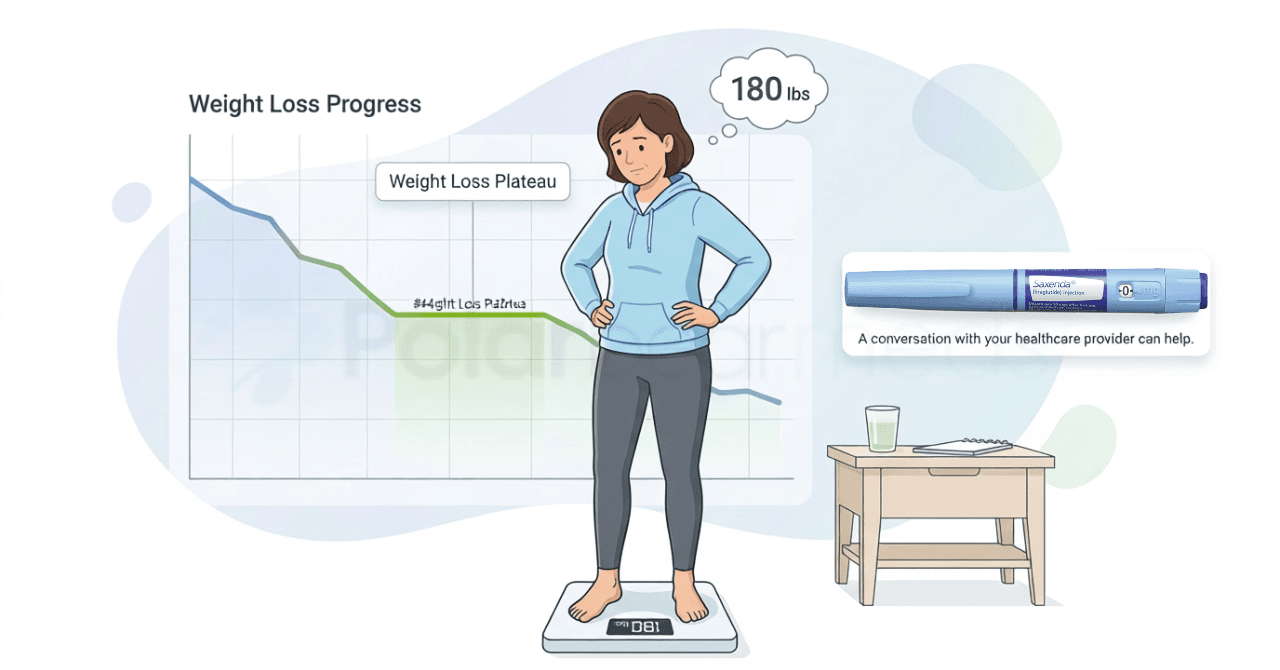
A weight loss plateau on Saxenda occurs when your progress slows down or stops despite continuing the medication and maintaining your routine. It often happens after an initial period of steady weight loss and is a normal part of the process.
Saxenda works by reducing appetite and calorie intake, but as your body adjusts and your weight decreases, your metabolism naturally requires fewer calories. This can make it harder to maintain the same rate of weight loss. Clinical studies show that Saxenda (liraglutide 3 mg) can help people lose around 5-10% of their body weight over 56 weeks (SCALE trial), although results vary and may slow due to natural body adaptation.
Why a Saxenda Plateau Should Not Be Ignored
A plateau during Saxenda treatment may seem temporary, but ignoring it can slow down your long-term progress. Instead of waiting it out, it’s important to understand what your body is signaling and respond proactively.
Here’s why addressing a plateau early matters:
- Prevents long-term stagnation by ensuring a short pause doesn’t turn into weeks or months of no progress.
- Helps identify hidden barriers such as subtle changes in diet, activity, sleep, or stress that may be affecting results.
- Supports better treatment decisions by signaling when it’s time to review your plan with a healthcare professional.
- Protects motivation and consistency by helping you take action before frustration builds up.
- Reduces the risk of weight regain that can occur when plateaus are ignored for too long.
5 Reasons Behind a Saxenda Weight Loss Plateau
Understanding why you’re not losing weight on Saxenda (liraglutide) is key to identifying what needs to change. A range of internal and lifestyle factors can affect how your body responds, leading to slower or stalled weight loss.
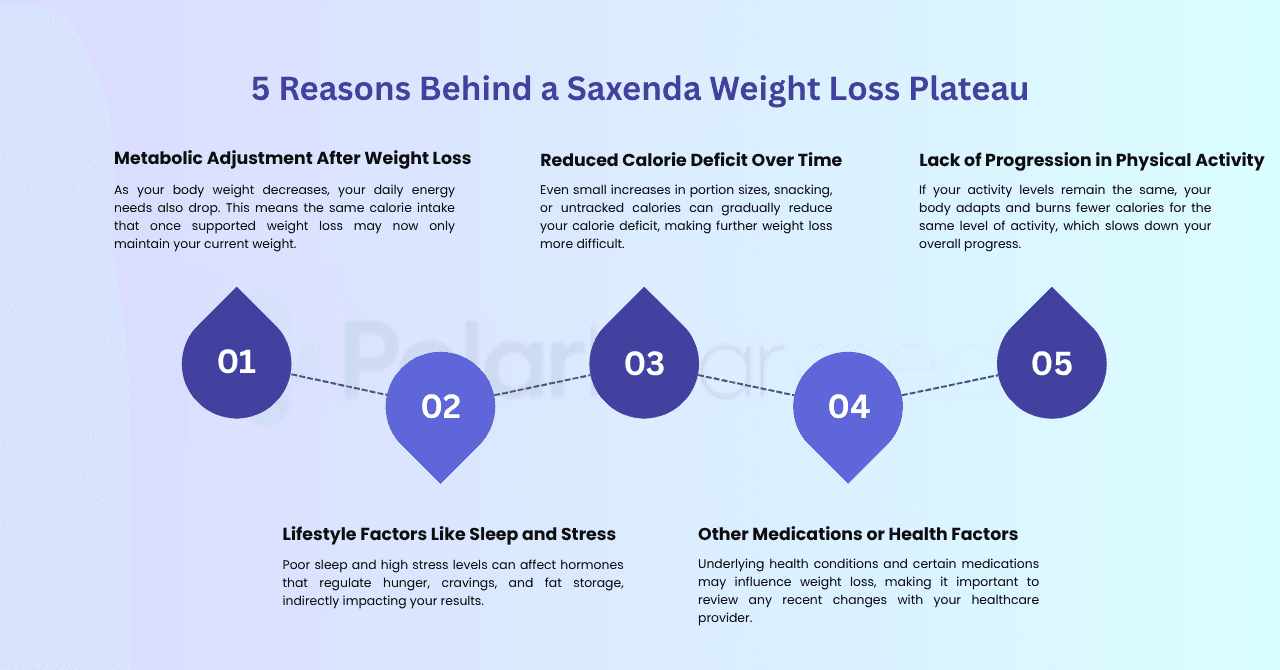
- Metabolic Adjustment After Initial Weight Loss
As your body weight decreases, your daily energy needs also drop. This means the same calorie intake that once supported weight loss may now only maintain your current weight. - Reduced Calorie Deficit Over Time
Even small increases in portion sizes, snacking, or untracked calories can gradually reduce your calorie deficit, making further weight loss more difficult. - Lack of Progression in Physical Activity
If your activity levels remain the same, your body adapts and burns fewer calories for the same level of activity, which slows down your overall progress. - Lifestyle Factors Like Sleep and Stress
Poor sleep and high stress levels can affect hormones that regulate hunger, cravings, and fat storage, indirectly impacting your results. - Other Medications or Health Factors
Underlying health conditions and certain medications may influence weight loss, making it important to review any recent changes with your healthcare provider.
How to Break a Weight Loss Plateau on Saxenda
Breaking a plateau on Saxenda (liraglutide) requires strategic change rather than drastic measures. The main goal is to reintroduce a sustainable calorie deficit while supporting metabolic health.
Reassess Your Calorie Intake
- Start tracking your meals again to spot small changes in portions or snacking.
- Focus on balanced meals with enough fiber and protein to stay full longer.
Increase Physical Activity Strategically
- Add regular resistance training sessions (2-3 times per week) to support fat loss and maintain muscle.
- Increase your daily movement, also known as Non-Exercise Activity Thermogenesis (NEAT), such as walking or taking stairs, and aim for 7,000 to 10,000 steps per day.
Stay Consistent with Your Medication
- Take Saxenda injections at the same time each day as prescribed.
- Avoid missing doses, as consistency is key to results.
Optimize Sleep and Stress Management
- Aim for 7-9 hours of quality sleep to regulate hunger hormones like ghrelin and leptin.
- Managing stress can also help control cortisol levels, which may influence fat storage.
Track Progress Beyond the Scale
- Monitor measurements, clothing fit, or weekly averages instead of daily weight.
- This helps identify fat loss even when weight remains stable.
Avoid Extreme or Unsustainable Changes
- Don’t drastically cut calories or over-exercise.
- Focus on steady, manageable changes that you can maintain long-term.
When to Seek Medical Advice
A weight loss plateau on Saxenda does not always mean the medication has stopped working. In many cases, maintaining your weight without regain is still considered a positive response.
However, you should consult a healthcare professional if:
- Your weight has not changed for 4-6 weeks despite consistent lifestyle adjustments
- There is no progress for more than 6-8 weeks
- Appetite or cravings have significantly returned
- You are struggling to maintain dietary control
A healthcare provider can assess your treatment response, review other medications, and determine whether any adjustments or alternative options are appropriate.
Saxenda Plateau Checklist for Better Results
| Checklist Item | What to Check | Status |
|---|---|---|
| Calorie Intake | Are you maintaining a consistent calorie deficit? | ✔ / ✖ |
| Meal Tracking | Are you accurately tracking meals, snacks, and beverages? | ✔ / ✖ |
| Physical Activity | Are you meeting or increasing your activity levels? | ✔ / ✖ |
| Strength Training | Are you including resistance exercises weekly? | ✔ / ✖ |
| Sleep Quality | Are you getting 7-9 hours of quality sleep regularly? | ✔ / ✖ |
| Stress Levels | Are stress levels managed effectively? | ✔ / ✖ |
| Medication Review | Have you reviewed your Saxenda dose with a doctor? | ✔ / ✖ |
| Other Medications | Any new medications affecting weight (e.g., steroids, antidepressants)? | ✔ / ✖ |
| Progress Monitoring | Are you consistently tracking weight or measurements? | ✔ / ✖ |
← Swipe to see more →
Key Takeaways for Managing a Saxenda Plateau
A weight loss plateau on Saxenda is a normal stage in the journey, not the end of progress. The most effective approach is to reassess calorie intake, increase activity, and improve sleep and stress management. Staying consistent with your medication can further support weight loss. Most importantly, always seek medical advice if your plateau lasts several weeks or if you’re unsure about adjustments.
At Polar Bear Meds, we recognize that managing weight loss medications like Saxenda can come with challenges, including plateaus. As a licensed Canadian pharmacy, we provide access to high-quality medications along with reliable support to help you stay on track. Order your medications online from Canada with convenient delivery to the U.S. through Polar Bear Meds.
Important Disclaimer: This article is for informational purposes only & does not replace professional advice. Always consult a qualified healthcare provider/doctor before starting or combining medications.
Frequently Asked Questions
A plateau can last anywhere from a few weeks to several months, depending on individual factors such as metabolism, adherence to diet, and activity levels. If weight remains unchanged for more than 4-6 weeks, it may be time to reassess your routine or consult your healthcare provider.
No, a plateau does not mean Saxenda has stopped working. It often indicates that your body has adapted to your current calorie intake and activity level. Adjustments in lifestyle or treatment strategy may help restore progress.
You should not adjust your dose without medical guidance. The standard maintenance Saxenda dose is typically 3.0 mg daily, and any changes should be made only after consulting a qualified healthcare professional.
In some cases, your healthcare provider/doctor may recommend switching to another GLP-1 medication or combining treatments. Options like semaglutide-based therapies may be considered based on your medical profile.
Highly processed foods, sugary beverages, and calorie-dense snacks can reduce your calorie deficit. Focusing on high-protein, fiber-rich foods can support appetite control and improve results.
Yes, it is common. Based on findings from the SCALE Obesity and Prediabetes trial, Saxenda (liraglutide) shows greater weight loss in the initial phase, with progress gradually slowing as the body adjusts.
Yes, poor sleep and high stress can influence hormones that regulate hunger and fat storage, which may indirectly slow down weight loss.
No, plateaus are usually temporary. With appropriate adjustments and medical guidance, further weight loss or maintenance is often possible.