Can You Take Trulicity Without Diabetes? What You Need to Know
Key Takeaways
- Trulicity is FDA-approved for type 2 diabetes, not for use in non-diabetics or for weight loss.
- Doctors may prescribe it off-label for obesity or insulin resistance in select cases under medical supervision.
- It works by slowing digestion and increasing fullness, which can support modest weight loss.
- Higher doses may lead to better results, but effects are still less than newer GLP-1 options.
- Safe use depends on proper screening, monitoring, and a personalized treatment plan.
Many people today are asking: Can non-diabetics take Trulicity? While you may have heard of its appetite-control benefits, Trulicity is primarily an FDA-approved treatment for Type 2 diabetes. This medication is not currently approved for weight loss in those without diabetes.
However, some doctors prescribe Trulicity off-label for weight management or insulin resistance. While effective for some, it is important to consult a healthcare provider, as other GLP-1 medications are specifically designed and approved for non-diabetic weight loss.
Why Would a Non-Diabetic Be Prescribed Trulicity?
Your doctor may prescribe Trulicity off-label when its metabolic effects match a patient’s specific health needs. This is done under medical supervision, not for general use.
Common reasons non-diabetics take Trulicity include:
- Trulicity for weight loss: Helps reduce appetite and slow digestion, specifically for patients with a BMI over 30 (obesity) or those who cannot tolerate more potent GLP-1s.
- PCOS & insulin resistance: Supports better insulin use in conditions like prediabetes or polycystic ovary syndrome (PCOS) to prevent future diabetic onset.
- Cardiometabolic risk: May help lower overall risk in patients with high metabolic or heart-related risk.
- Metabolic syndrome: Used in patients with combined issues like belly fat, high blood pressure, and poor glucose control.
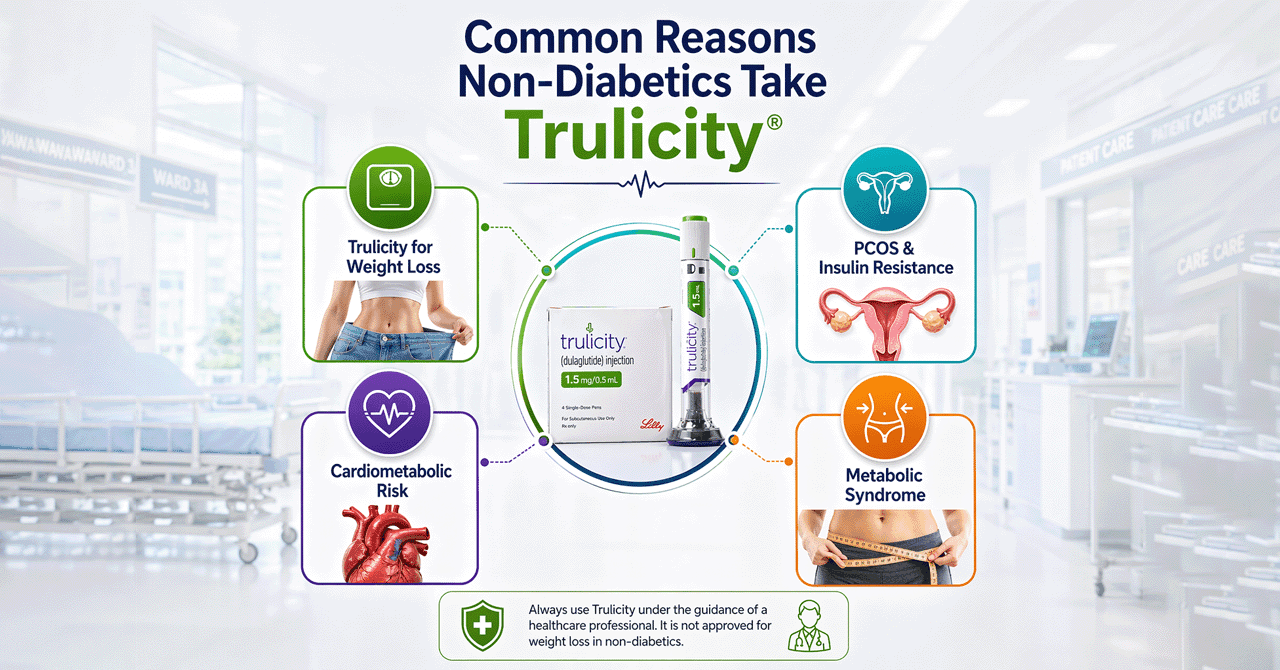
Note: Trulicity off-label use may not be covered by insurance and requires close monitoring by a healthcare provider.
Trulicity for Weight Loss: Does It Work Without Diabetes?
Trulicity is not FDA-approved for weight loss, but clinical studies (including AWARD-11) show it can lead to modest, dose-dependent weight loss when used off-label under medical supervision.
Evidence-Based Results:
- 1.5 mg dose: ~3% body weight loss (approximately 6-7 lbs)
- 3.0 mg-4.5 mg dose: ~5% to 7% body weight loss (approximately 10-15 lbs)
- Clinical Significance: A 5% weight loss is the medical benchmark for significantly improving blood pressure, cholesterol, and insulin sensitivity.
Trulicity is less potent for weight loss than newer drugs like Wegovy or Zepbound, but it is often better tolerated by those sensitive to nausea. Because weight loss is gradual and may plateau, consistent diet and physical activity remain essential for long-term success.
What Happens If a Non-Diabetic Takes Trulicity?
When a non-diabetic starts Trulicity (dulaglutide), the body goes through an adjustment phase as the medication gradually reaches a steady concentration in the bloodstream.
- Days 1-2: Some patients may notice a reduction in appetite and decreased urge to eat between meals.
- Week 1: Earlier satiety (feeling full sooner) is common due to slower gastric emptying. Overeating may increase the likelihood of nausea.
- Weeks 2-3: Improved post-meal glucose regulation may lead to more stable energy levels.
- Week 4: The medication reaches steady-state levels; healthcare providers may evaluate response before adjusting the dose.
Patient Tip: Maintain adequate hydration, as reduced appetite and gastrointestinal side effects may lower fluid intake during the initial weeks.
Is It Safe to Take Trulicity Without Diabetes?
While Trulicity is not FDA-approved for non-diabetics, it is generally considered safe when prescribed off-label by a doctor. Because its active ingredient (dulaglutide) is "glucose-dependent," it primarily stimulates insulin only when your blood sugar is elevated from food.
For most non-diabetic users, the risk of low blood sugar is low when not combined with other diabetes medications. However, "safe" does not mean "side-effect free." Non-diabetics often experience:
- Gastrointestinal Distress: Nausea and "sulfur burps" are common as the body adjusts.
- Dehydration: Due to decreased thirst and potential vomiting.
Pancreatitis Risk: A rare but serious inflammation of the pancreas.
Who Should Not Take Trulicity If Not Diabetic?
Trulicity is not suitable for everyone, especially when used off-label. You should avoid it unless cleared by a doctor if you have:
- Thyroid Cancer Risk: A personal or family history of MTC (Medullary Thyroid Carcinoma) or Multiple Endocrine Neoplasia syndrome type 2 (MEN2). This is a primary Trulicity FDA boxed warning.
- History of Pancreatitis: Potential increased risk of painful inflammation of the pancreas.
- Severe Digestive Conditions: Including gastroparesis (slowed stomach) or serious inflammatory bowel disease.
- Severe Kidney Disease: Especially end-stage renal issues or patients on dialysis.
- Pregnancy or Breastfeeding: Generally avoided due to limited safety data; doctors advise stopping 2 months before conception.
- Severe Allergy: Known hypersensitivity to dulaglutide or any of the pen's ingredients.
Because risks can vary, always consult your healthcare provider before considering using Trulicity for non-diabetes.
Conclusion: Can You Take Trulicity (dulaglutide) If You Are Non-Diabetic?
Trulicity is not approved for non-diabetics, but doctors may prescribe it off-label in specific cases like obesity or insulin resistance. It can support gradual weight loss and appetite control, though results are usually modest compared to newer GLP-1 therapies. Because risks such as pancreatitis exist, it should only be used under proper medical supervision with a personalized treatment plan.
Frequently Asked Questions
Yes, but only under a doctor’s guidance. Trulicity and Mounjaro are once-weekly injectable medications used for type 2 diabetes. Switching between these medications requires dose adjustments and monitoring to avoid side effects or changes in blood sugar.
Trulicity is not approved for weight loss, but studies show modest weight loss of about 3% to 7% of body weight (roughly 6-7 lbs), depending on dose and duration.
Yes. Common side effects include nausea, diarrhea, vomiting, stomach pain, decreased appetite, and fatigue. These gastrointestinal symptoms are most common when starting treatment or increasing the dose and often improve over time as the body adjusts.
Medical Disclaimer
This content is for informational purposes only and does not constitute medical advice. Trulicity use in non-diabetics may vary based on individual health conditions. Always consult a licensed healthcare provider before stopping, starting, or using this medication off-label.