How Long After Taking Eliquis Can You Drink Alcohol?
Key Takeaways
- There is no safe waiting period after taking Eliquis to drink alcohol.
- Eliquis (apixaban) continues to affect blood clotting for about 24 hours, so the risk remains even if you wait.
- Drinking alcohol while on Eliquis can increase the risk of bleeding, including serious or internal bleeding.
- There is no risk-free amount of alcohol; even small amounts may still carry risk.
- Skipping or delaying Eliquis to drink alcohol is dangerous and increases the risk of blood clots or stroke.
There is no specific waiting period that makes alcohol safe after taking Eliquis. The medication works continuously in your body, so even if you wait a few hours, its blood-thinning effect is still active. According to FDA prescribing information, the effect of Eliquis (apixaban) can persist for at least 24 hours after a dose, meaning alcohol consumed during this time can still increase your risk of bleeding.
If you are wondering: How long after taking Eliquis can you drink alcohol?, the answer is that timing alone does not make drinking safe. The risk remains as long as the medication is active in your system.
What Happens If You Drink Alcohol After Taking Eliquis
Drinking alcohol after taking Eliquis can increase your risk of bleeding because the medication is still active in your system. Waiting after taking Eliquis does not make alcohol safer, as its blood-thinning effect remains active for at least 24 hours. According to MedlinePlus data, apixaban increases your tendency to bleed and can make it harder for bleeding to stop. When alcohol is added while the medication is still active, the risk of bleeding can increase regardless of how long you wait.
The FDA label states that Eliquis can cause serious, potentially fatal bleeding, and this risk remains while the drug is active in your system. As a result, drinking alcohol may lead to prolonged bleeding, easy bruising, or more serious complications such as internal bleeding. In some cases, these effects can become severe or life-threatening, especially if bleeding is not recognized early.
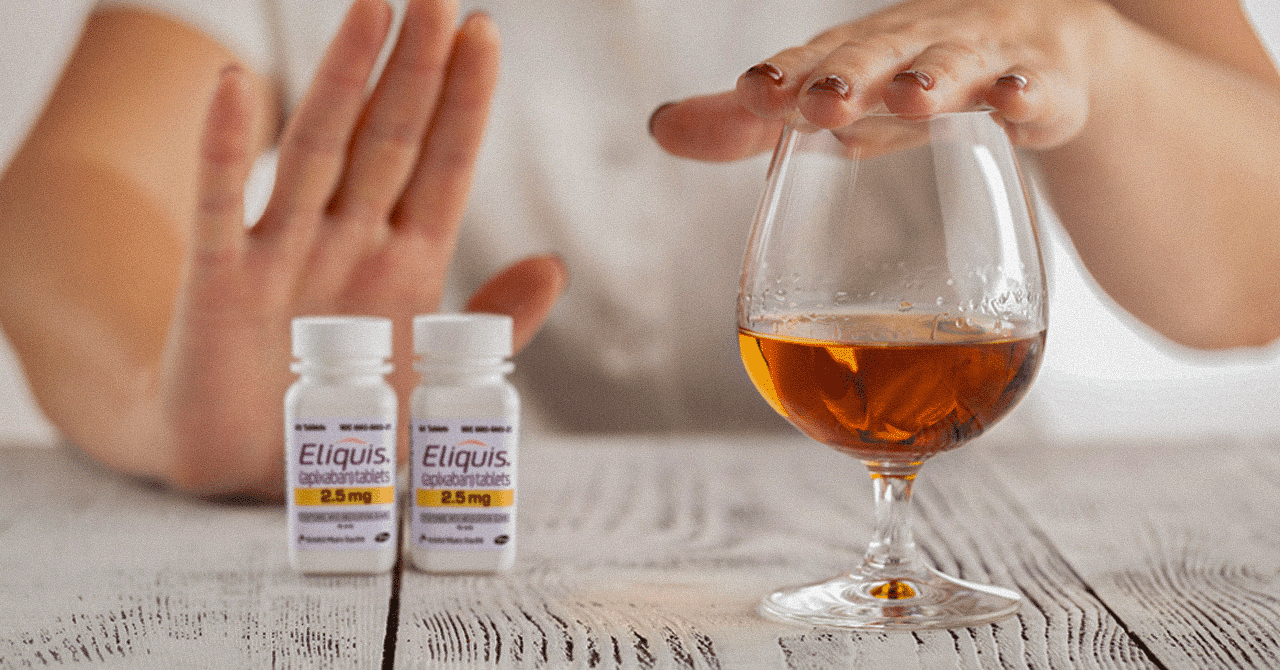
Who Should Avoid Alcohol Completely While Taking Eliquis
Some people have a higher risk of bleeding and should avoid alcohol completely while taking Eliquis. According to Poison Control, alcohol can increase bleeding risk and may affect balance, raising the chance of injury and internal bleeding while taking Eliquis. You should avoid alcohol if you have the following risk factors:
| Risk Factor | Why Alcohol Should Be Avoided on Eliquis |
|---|---|
| History of bleeding problems or easy bruising | Higher chance of prolonged or uncontrolled bleeding |
| Liver disease or impaired liver function | Increased bleeding risk due to reduced clotting control |
| Use of other blood thinners or interacting medications | The combined effect can significantly raise the bleeding risk |
| Conditions like atrial fibrillation or deep vein thrombosis | Interrupting clot prevention can lead to serious complications |
← Swipe to see more →
The CDC also states that some people should not drink alcohol at all, especially those with certain medical conditions or those taking medications that interact with alcohol. If you fall into any of these categories, even occasional drinking can be unsafe while taking Eliquis.
How Much Alcohol Is Considered Safe on Eliquis
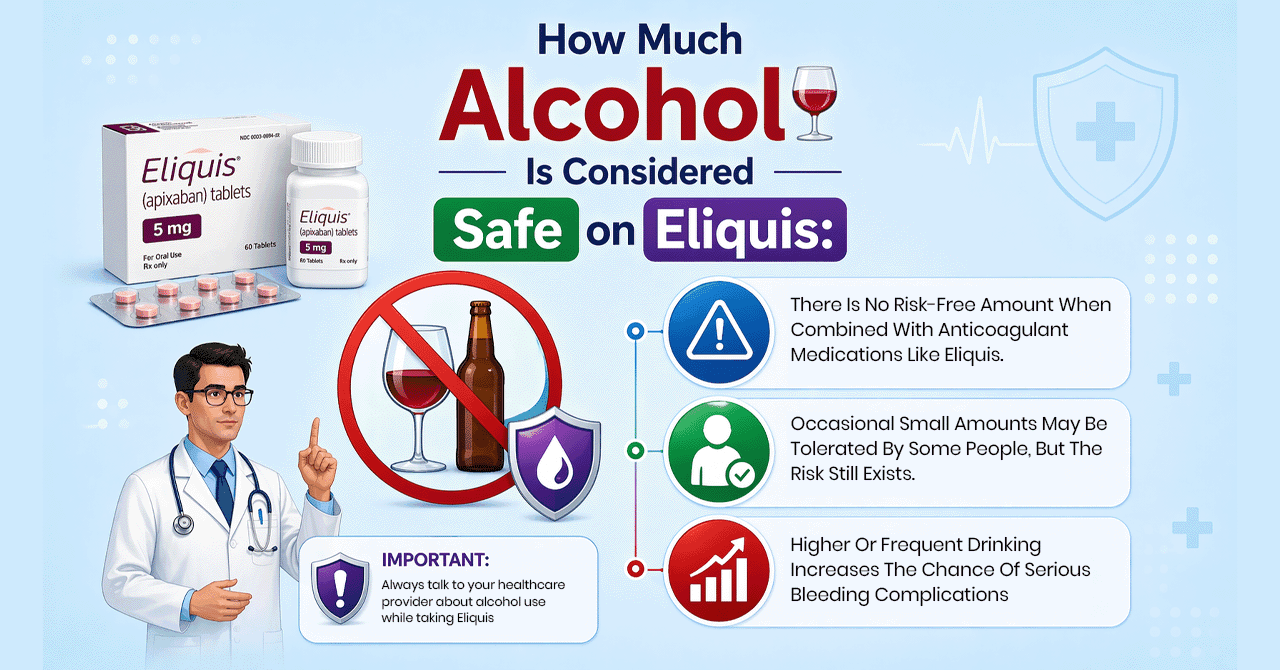
There is no clearly defined “safe” amount of alcohol while taking Eliquis. Even small amounts can increase your bleeding risk because the medication already affects how your blood clots. According to CDC guidance, moderate alcohol consumption is defined as a maximum of one drink daily for women and up to two drinks daily for men, but even moderate alcohol use can still carry health risks.
- There is no risk-free amount when combined with anticoagulant medications like Eliquis.
- Occasional small amounts may be tolerated by some people, but the risk still exists.
- Higher or frequent drinking increases the chance of serious bleeding complications.
The safest approach depends on your individual condition and medical advice.
Can You Skip or Delay Eliquis to Drink Alcohol?
No, you should not skip or delay Eliquis if you drink alcohol. Doing this increases your risk of blood clots, which can lead to severe complications such as stroke. The MedlinePlus data show that stopping apixaban suddenly increases your risk of forming a blood clot. The FDA label also warns that premature discontinuation of Eliquis increases the risk of thrombotic events.
Skipping a dose to drink may seem like it reduces bleeding risk, but it exposes you to a much more dangerous problem. The medication is prescribed to continuously prevent blood clots, and interrupting it can remove that protection. For this reason, Eliquis should always be taken exactly as prescribed, regardless of alcohol use.
When to Seek Medical Help After Drinking Alcohol on Eliquis
You should seek medical help immediately if you notice signs of abnormal bleeding after drinking alcohol while taking Eliquis. The medication already increases your bleeding risk, and alcohol can make this worse. Watch for these warning signs:
- Bleeding that does not stop or lasts longer than usual
- Vomit that looks like blood or coffee grounds
- Unusual bruising or frequent nosebleeds
- Blood in urine or stool, or black, tarry stools
- Severe headache, dizziness, or weakness
These symptoms may indicate internal bleeding and require urgent medical attention.
The Bottom Line: Does Waiting Make Alcohol Safe on Eliquis?
There is no specific waiting period that makes alcohol safe after taking Eliquis, because the medication continues to affect blood clotting for at least 24 hours. Waiting a few hours does not remove the risk, and alcohol can still increase the chance of bleeding while the drug is active. For some people, especially those with higher risk factors, avoiding alcohol completely may be the safest approach.
If you are deciding: how long after taking Eliquis can you drink alcohol, the key point is that timing alone does not reduce the risk. Any decision should be based on your individual health condition and your doctor’s advice.
Frequently Asked Questions
You may be able to drink a small amount in some cases, but it increases bleeding risk. Many healthcare providers recommend avoiding alcohol or limiting it strictly, especially if you have additional risk factors.
Some people may tolerate one drink, but there is no risk-free amount. Even a single drink can increase the chance of bleeding while Eliquis is active in your system.
There is no universally safe amount. Even moderate drinking can carry risks when combined with anticoagulant medications like Eliquis.
Yes. Eliquis already increases your bleeding risk, and alcohol can add to that effect, making bleeding more likely or harder to control.
There is no guaranteed safe timing or amount. The safest approach is to limit or avoid alcohol and follow medical advice based on your condition.
Eliquis can continue to affect blood clotting for at least 24 hours after a dose. This is why timing alcohol intake does not fully remove the risk.
No. Skipping a dose increases your risk of blood clots and serious complications such as stroke. Eliquis should always be taken as prescribed.
Important Disclaimer
This blog is provided for informational purposes only and does not replace expert medical guidance, diagnosis, or treatment. The information is based on sources such as the FDA and National Library of Medicine, but individual responses may vary. Always consult an authorized healthcare professional before making any decisions about your medication or alcohol use.